
What Causes Parking Lot Potholes and How to Prevent Them
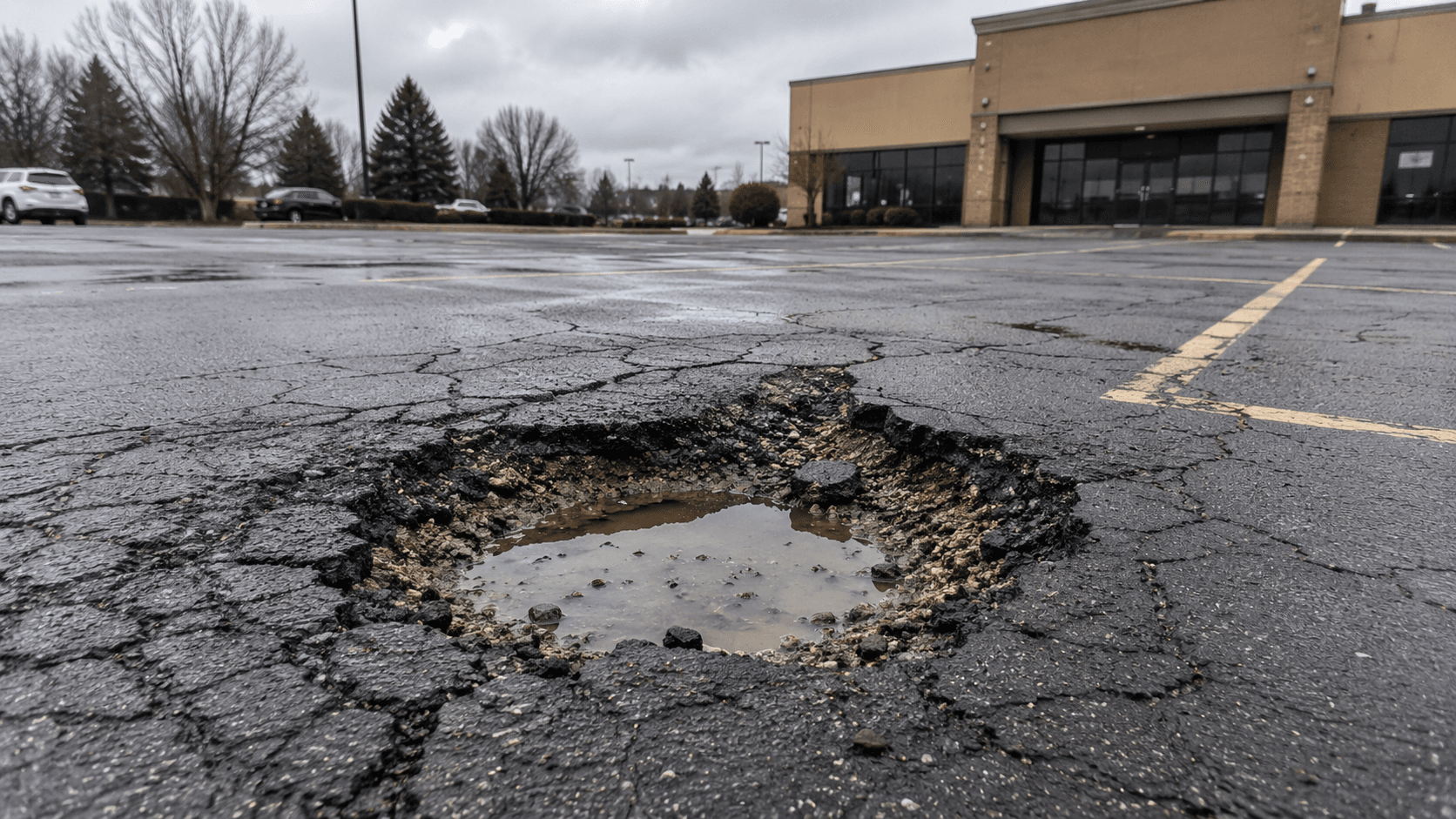
A pothole is never really about the hole. By the time you can see it, the actual problem started months earlier , usually with a crack nobody dealt with.
I've repaired thousands of potholes across 45+ states, and almost every one traces back to the same chain of events. The good news? Break that chain early and you can keep most potholes from ever forming.
The Simple Formula Behind Every Pothole
Strip away the details and every pothole comes down to three things:
Cracks + Water + Traffic = Pothole
A crack lets water in. Water weakens what's underneath. Traffic does the rest. In cold regions, freeze-thaw cycles speed the whole thing up. Take away any one of those three and the pothole usually never happens.
How A Pothole Actually Forms
Here's the chain of events, step by step:
- A crack opens up. Asphalt ages, dries out, and cracks , or traffic fatigues a weak spot.
- Water gets in. Rain or melting snow seeps through the crack down to the base layer under your asphalt.
- The base weakens. In cold weather the trapped water freezes and expands, lifting the pavement and leaving a hollow void when it thaws. In any climate, a saturated base loses strength.
- Traffic punches through. A truck , or even a car , rolls over the weakened spot, the surface collapses into the void, and you've got a pothole.
Once it's open, it grows fast. More water collects, more traffic hits the edges, and a small hole becomes a big one in weeks. As the City of Chicago's pavement guidance explains, the freeze-thaw cycle is the main driver behind pothole season , and the same physics that wrecks city streets wrecks parking lots.
Why Some Lots Get Potholes and Others Don't
Two lots in the same town can age completely differently. Usually it comes down to these:
- Unsealed cracks , the entry point for every bit of water. Ignore them and you're inviting potholes.
- Poor drainage , water that sits on the lot after rain is a constant supply soaking into the base.
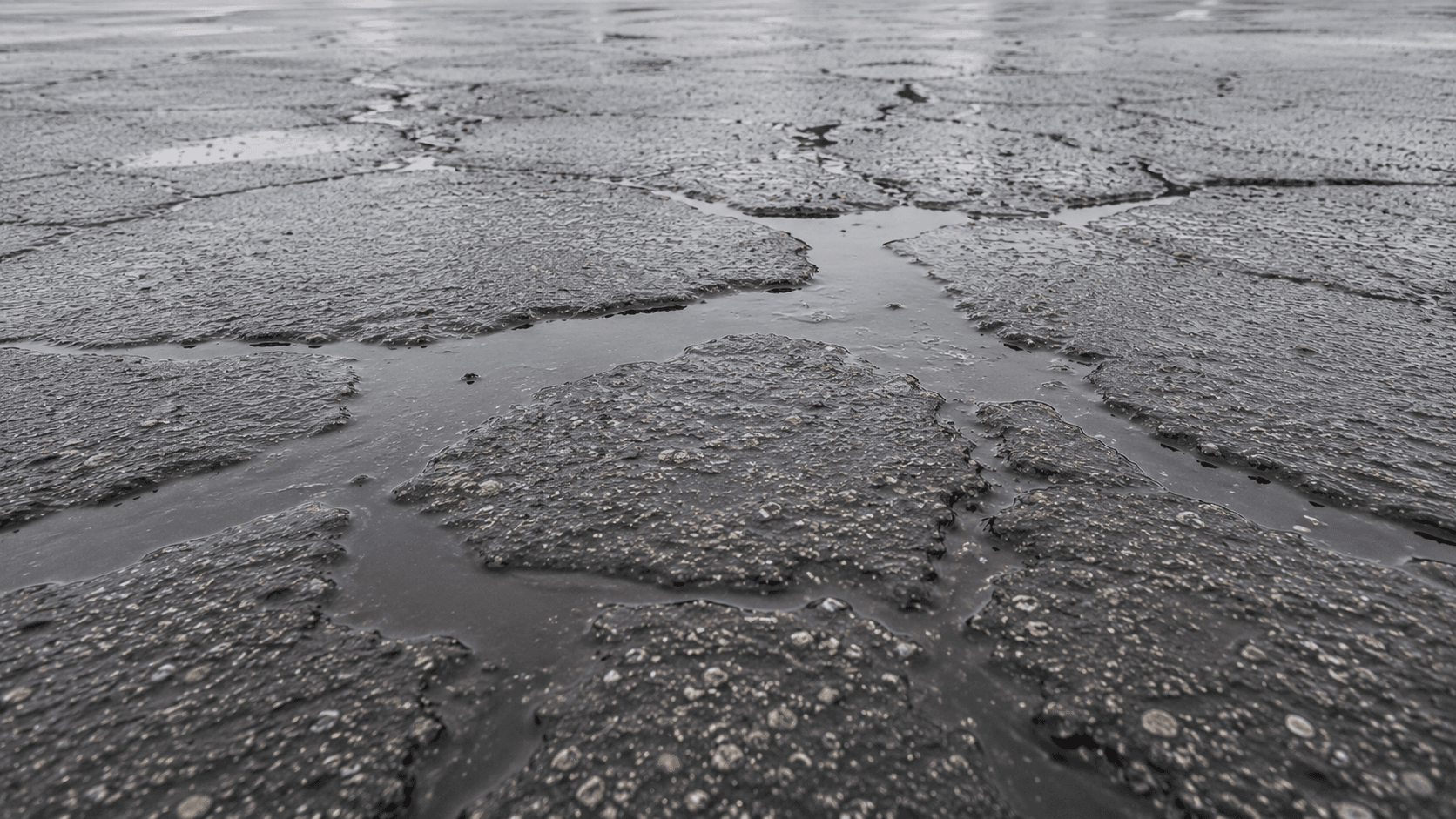
- Aging, oxidized asphalt , gray, brittle pavement that hasn't been seal coated cracks far more easily.
- A weak base , lots built on a thin or poorly compacted base never had a fighting chance.
- Heavy loads , delivery trucks, dumpsters, and constant traffic punish the same spots over and over.
How to Prevent Parking Lot Potholes
This is the part worth your attention, because prevention is cheap compared to repair. Here's what actually works, roughly in order of impact:
- Fill cracks early. This is number one. Sealing cracks keeps water out before it ever reaches the base. A few dollars of crack filling prevents a few hundred dollars of pothole repair.
- Seal coat on schedule. Every 2–3 years. It blocks water and UV, keeps the asphalt flexible, and slows the cracking that starts the whole cycle.
- Fix your drainage. If water pools on your lot, get the grade corrected. Standing water is a pothole factory.
- Inspect twice a year. Walk the lot in spring (after winter damage shows) and fall (before the freeze). Catch small cracks and depressions while they're still small.
- Repair small damage fast. A minor crack or soft spot handled today is far cheaper than the pothole it becomes next season.
Do those five things and you'll prevent the large majority of potholes a commercial lot would otherwise develop.
Why Chasing Potholes Costs More
Here's the math I walk owners through. Filling cracks and seal coating runs pennies per square foot. A single pothole repair can run a few hundred dollars , and if it was patched with cheap cold patch, it'll likely reopen and you'll pay again.
Worse, an open pothole is a liability: tripping hazards, vehicle damage claims, unhappy tenants. Prevention isn't just cheaper than repair , it's cheaper than the problems a pothole creates.
Catch Them While They're Small
The single best habit is simple: look at your lot before it forces you to. A quick seasonal walk-through catches the cracks and soft spots that turn into potholes.
When you do find damage, fix it properly. We use semi-permanent and full-depth repair methods , and infrared repair for a seamless, joint-free fix , not the throw-and-go cold patch that pops back out by spring.
FAQs
Why do potholes keep coming back in the same spot?
Because the real problem is underneath. If the base is weak or water keeps reaching it, a surface patch won't hold , the spot fails again. Recurring potholes usually mean you need a full-depth repair that rebuilds the base, not another cold patch.
Can sealing cracks really prevent potholes?
Yes , it's the single most effective thing you can do. Cracks are how water reaches the base, and water in the base is what creates potholes. Seal the cracks early and you cut off the cause before it starts.
Do potholes only form in cold climates?
No. Freeze-thaw makes them form faster, but any lot with cracks, water, and traffic can develop potholes. In warmer regions, poor drainage and aging asphalt are the bigger culprits.
Is it cheaper to repair potholes or prevent them?
Prevention wins, every time. Crack filling and seal coating cost a fraction of pothole repair , and they spare you the liability and tenant complaints an open pothole brings. Maintenance is always the cheaper path.
Free Site Assessment