
Warehouse & Industrial Parking Lot Paving: What's Different
Quick Answer
Warehouse and industrial lots need 5 to 8 inches of asphalt versus 3 to 4 for retail, reinforced loading dock aprons, and more frequent maintenance due to heavy truck and forklift traffic.
A warehouse lot and a retail lot might look similar from above. What happens on them is completely different, and that difference has to be built into the pavement itself.
I am Gabriel, founder of FineLines. We pave industrial and warehouse properties across 45+ states, so here is what actually changes when the job is a distribution center instead of a shopping plaza.
Why Warehouse Paving Is Different From Retail Paving
Three things separate warehouse and industrial paving from retail or office work: the load the pavement carries, the traffic pattern around loading docks, and the striping requirements for forklifts and trailers.
How Thick Does Industrial Asphalt Need to Be?
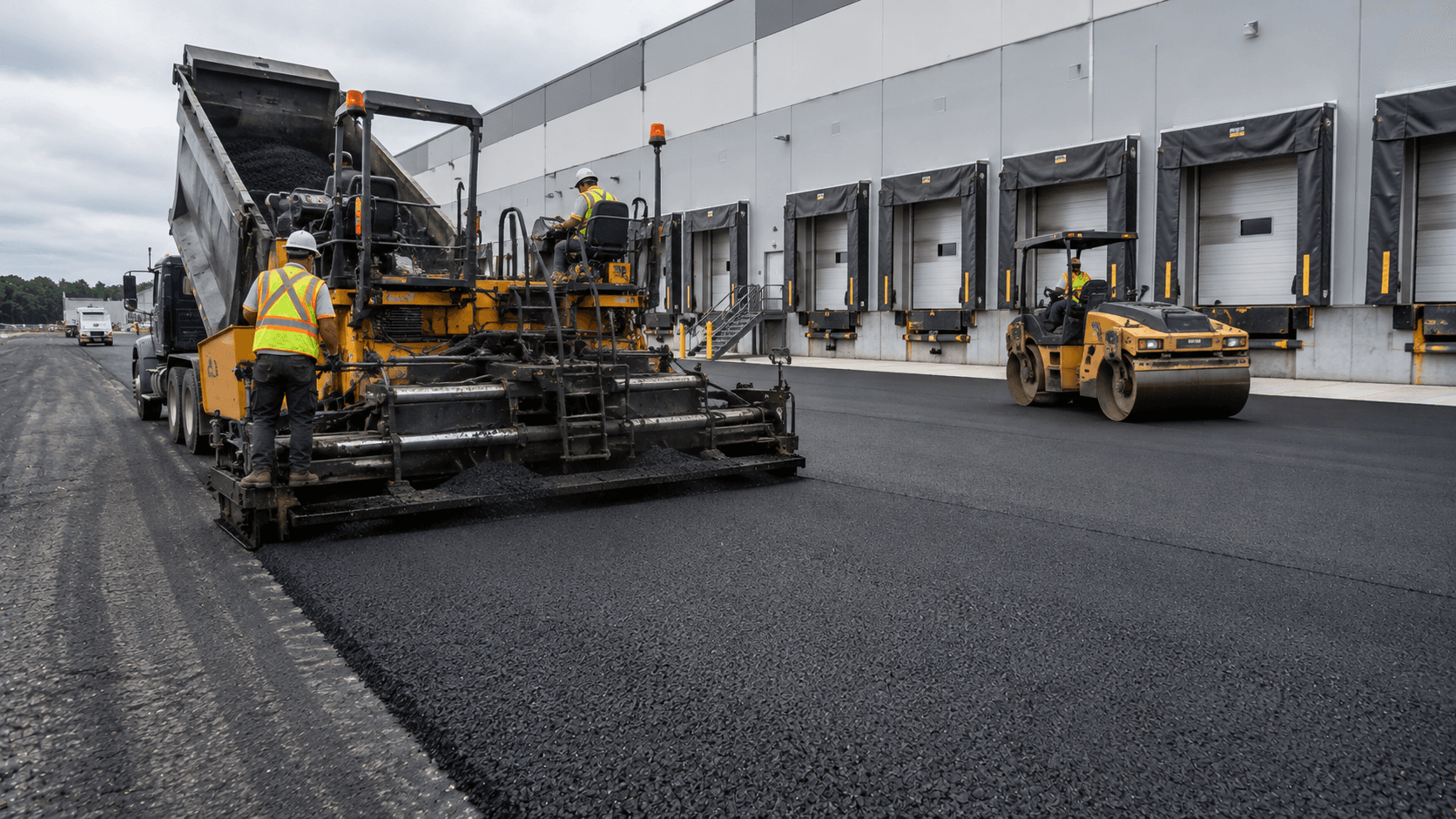
Industrial and warehouse lots that carry regular truck and trailer traffic typically need 5 to 8 inches of asphalt, compared to 3 to 4 inches for a standard retail or office parking lot, a range consistent with design guidance from the National Asphalt Pavement Association. Loading dock aprons, where trucks maneuver and idle under load, often need reinforced base sections built specifically for that repeated stress.
| Lot Type | Typical Asphalt Thickness | Primary Load |
|---|---|---|
| Retail or office parking | 3–4 inches | Passenger vehicles |
| Warehouse drive lanes | 5–6 inches | Delivery trucks, trailers |
| Loading dock apron | 6–8 inches | Idling trucks under full load |
Striping Requirements for Loading Docks and Forklift Lanes
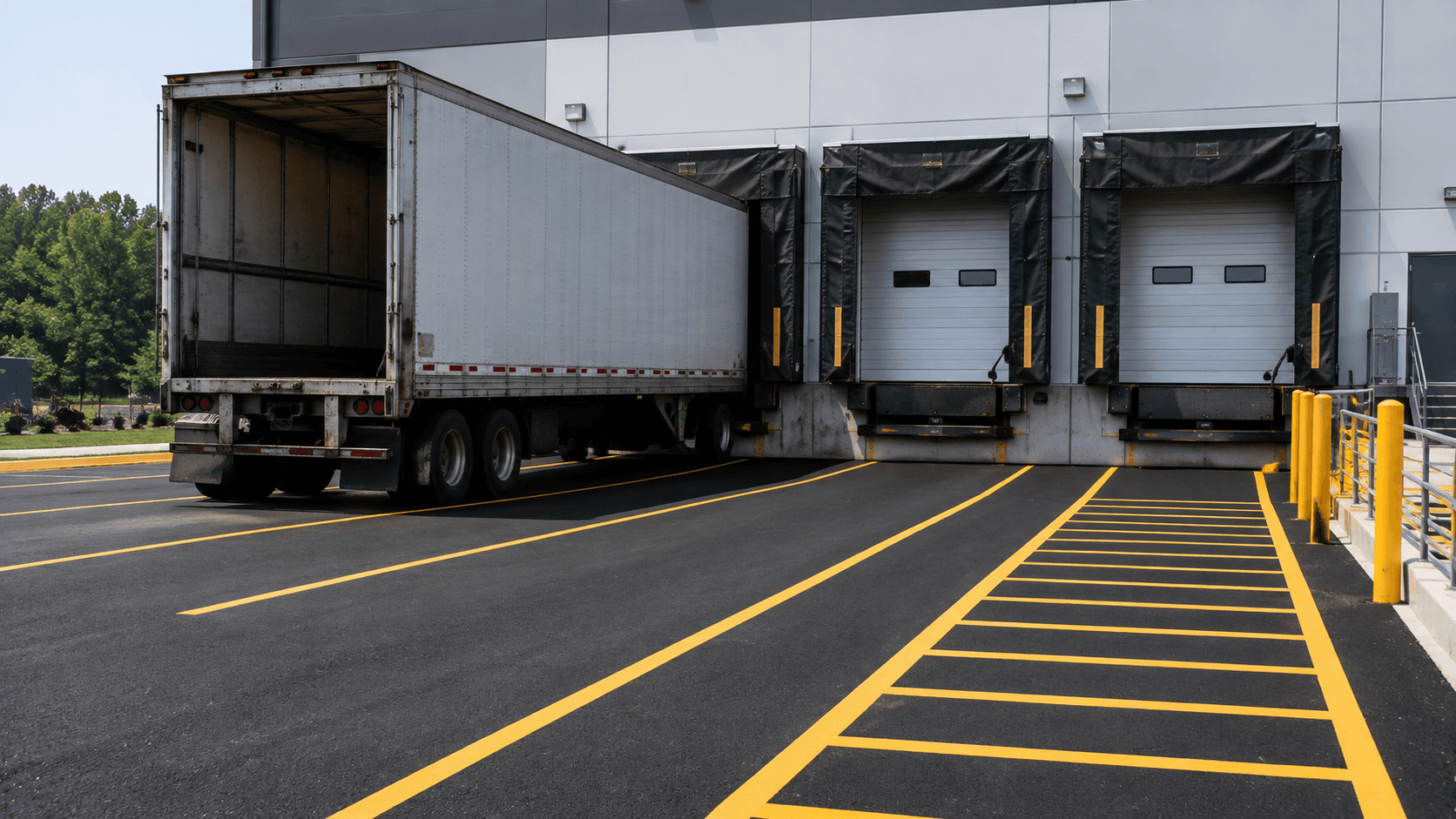
Loading docks and forklift lanes need bold, high-visibility markings, typically yellow, since these are high-risk zones where pedestrians and heavy equipment share space. Dedicated forklift travel lanes, pedestrian walkways separated from vehicle paths, and clearly marked trailer staging areas are standard on a well-designed industrial lot.
Industrial Pavement Needs More Frequent Maintenance
A warehouse lot typically needs attention more often than a retail lot of the same size. Heavy truck traffic and idling loads accelerate wear, so seal coating every 2 years rather than 3, and more frequent crack inspection near loading docks, is the right rhythm for most industrial properties.
A Real Consideration in the Northeast Corridor
We see meaningful warehouse and distribution demand across Connecticut and New Jersey, where logistics and distribution properties sit close to major highway corridors. Freeze-thaw winters in this region add another layer of stress on top of the heavy loads these lots already carry.
When we handle asphalt paving for a warehouse or industrial property, we build the base thickness around the actual vehicle loads the lot will carry, not a standard commercial spec. Our multi-family and apartment complex paving guide covers the other end of the property-type spectrum, where the priority is residents instead of trucks.
FAQs
How thick should asphalt be for a warehouse parking lot?
Warehouse drive lanes typically need 5 to 6 inches of asphalt, while loading dock aprons that carry idling trucks under load often need 6 to 8 inches with reinforced base sections.
What color striping should be used at loading docks?
Yellow is standard for loading docks and forklift lanes because of its high visibility, which matters in these high-risk zones where pedestrians and heavy equipment share space.
How often should an industrial parking lot be seal coated?
Roughly every 2 years for most industrial properties, sooner than the 2 to 3 year cycle typical of retail lots, since heavy truck traffic and idling loads accelerate surface wear.
Does a warehouse lot need a different base than a retail lot?
Yes. Industrial lots carrying regular truck and trailer traffic need a thicker, more heavily compacted base than a retail lot built for passenger vehicles, particularly at loading dock aprons where trucks idle under full load.
Free Site Assessment