
Senior Living & Nursing Home Facility Parking Lot Paving
Quick Answer
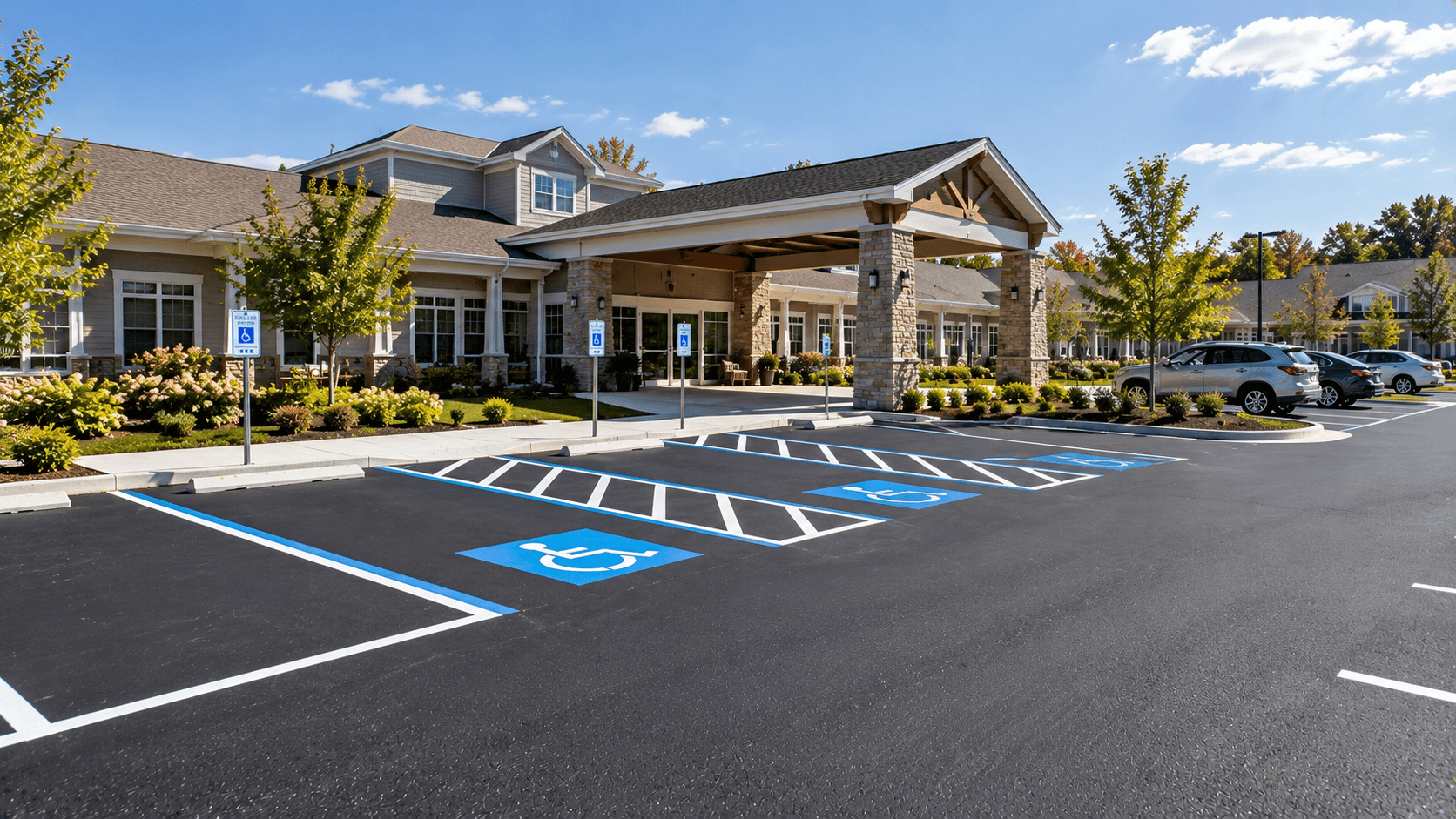
Senior living and nursing home parking lots need a flatter, more slip-resistant surface, a higher share of accessible stalls than the ADA minimum, and drop-off areas designed for wheelchairs and walkers, since roughly 75% of nursing home residents need mobility assistance.
A cracked expansion joint or a slightly uneven transition that a healthy adult wouldn't notice can be a real fall risk for a resident using a walker. That's not a compliance technicality at a senior living facility, it's the actual point of the job.
I am Gabriel, founder of FineLines. We've paved nursing and senior living facilities across 45+ states, so here is what actually changes for this property type.
Why This Property Type Needs a Higher Standard Than Minimum Code
According to data cited from the CDC's National Center for Health Statistics, roughly 75% of nursing home residents require assistance with mobility, using wheelchairs, walkers, or other mobility devices. That population profile is why a senior living lot should be built to a higher practical standard than the legal minimum, not just meet it.
What Actually Changes for Paving and Layout
- A flatter, more consistent surface. Minor cracks, uneven joints, and rough transitions that are a non-issue on a typical commercial lot become real trip and fall hazards here.
- More accessible stalls than the bare minimum, positioned on the shortest, most direct route to the entrance, since many residents and visiting family members are the ones using them.
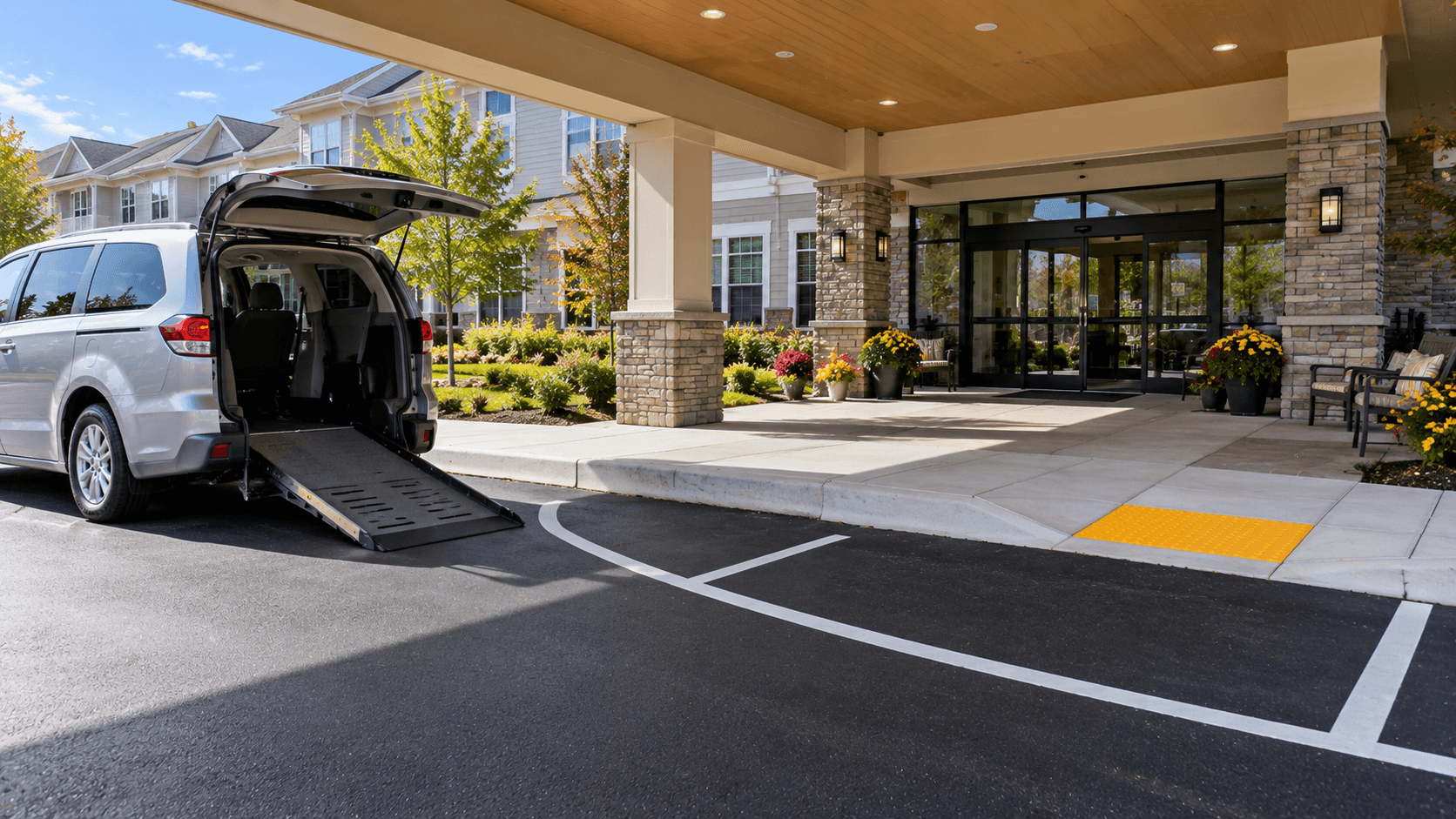
- Covered or sheltered drop-off areas, where wheelchair-accessible vans and ambulettes can load and unload without blocking through-traffic.
- Slip-resistant surfacing near entrances, where seasonal weather and foot traffic combine to create the highest-risk areas of the property.
Maintenance Priorities Are Different Here Too
A pothole or a spreading crack that would sit on a maintenance list for a few months at a typical commercial property needs faster attention at a senior living facility, because the population using that surface daily has a much lower margin for error. Proactive crack filling and seal coating on a tighter schedule is a safety decision here, not just a pavement-longevity one.
Working Around a Live, Occupied Facility
Unlike a retail lot that closes overnight, a senior living facility operates continuously, with residents, staff, and visiting family present at all hours. Paving and striping work needs to be phased so accessible routes and drop-off areas stay open throughout, with the more disruptive work scheduled to minimize disruption to daily resident routines.
When we handle asphalt paving or seal coating for a senior living property, we plan the work around residents who live there every day, not just around a project timeline. Our ADA parking lot markings guide covers the accessible stall and signage specifics that apply on top of these safety considerations.
FAQs
Do nursing homes need more accessible parking than a standard commercial lot?
The legal minimum follows the same ADA scoping table as other commercial properties, since nursing homes are long-term residential care rather than outpatient medical facilities. In practice, given that most residents need mobility assistance, many senior living properties benefit from exceeding the minimum for genuine safety reasons, not just compliance.
What surface qualities matter most for a senior living parking lot?
A flat, even, slip-resistant surface with minimal cracking or uneven transitions matters more here than at a typical commercial lot, since residents using wheelchairs and walkers have far less tolerance for surface irregularities than the general public.
Can paving work be done at a senior living facility without disrupting residents?
Yes, with proper phasing. Work is sequenced so accessible routes and drop-off areas remain functional throughout the project, since these facilities operate continuously and can't simply close for the day the way a retail property might.
How often should a nursing home parking lot be resealed or re-striped?
Often on a tighter schedule than a standard commercial property, since minor surface deterioration poses a higher real risk to this specific population. Proactive crack filling and seal coating are worth prioritizing over a reactive maintenance approach.
Free Site Assessment