
Can You Pave Asphalt In Cold Weather? What's Actually Possible
Quick Answer
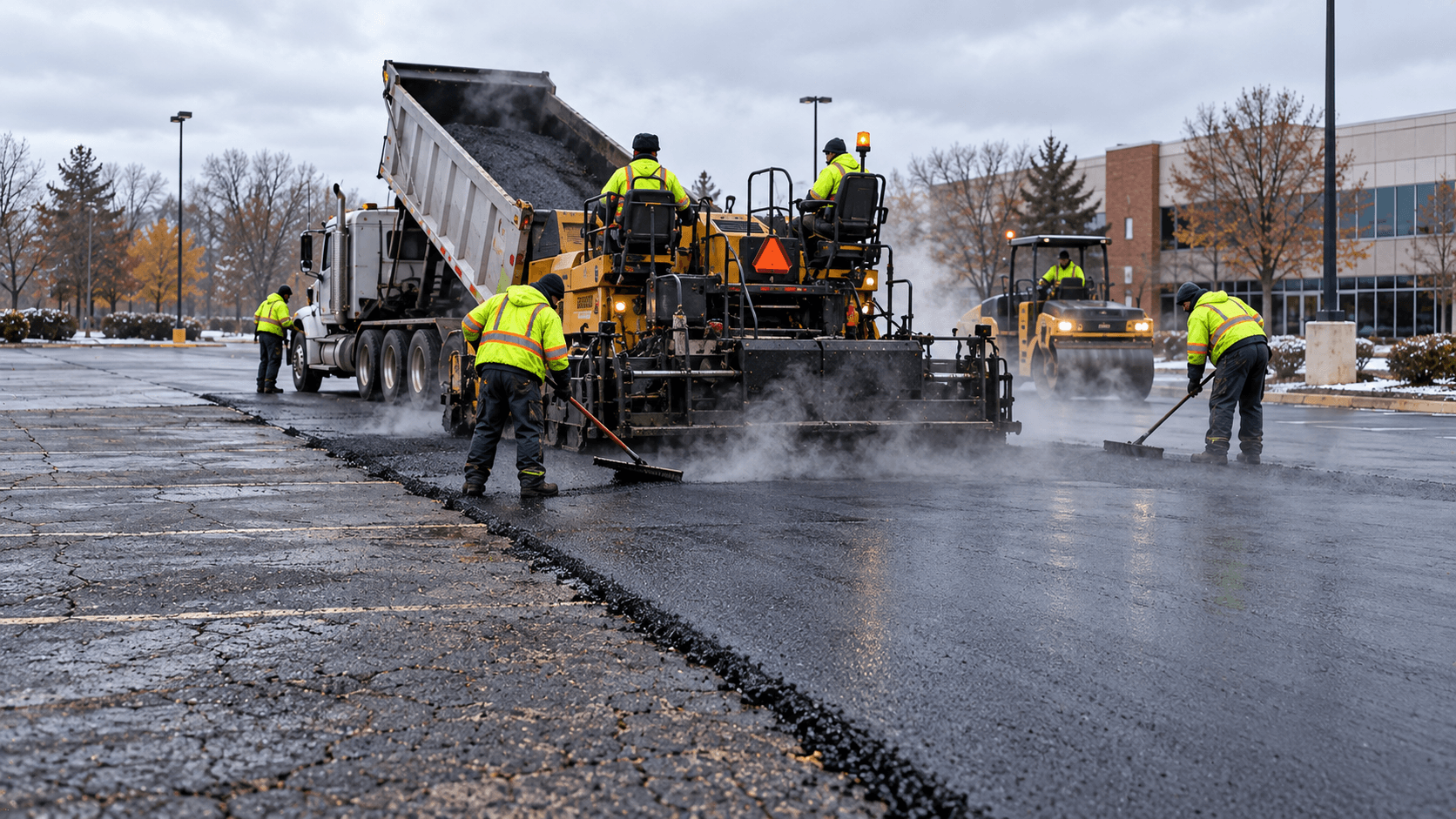
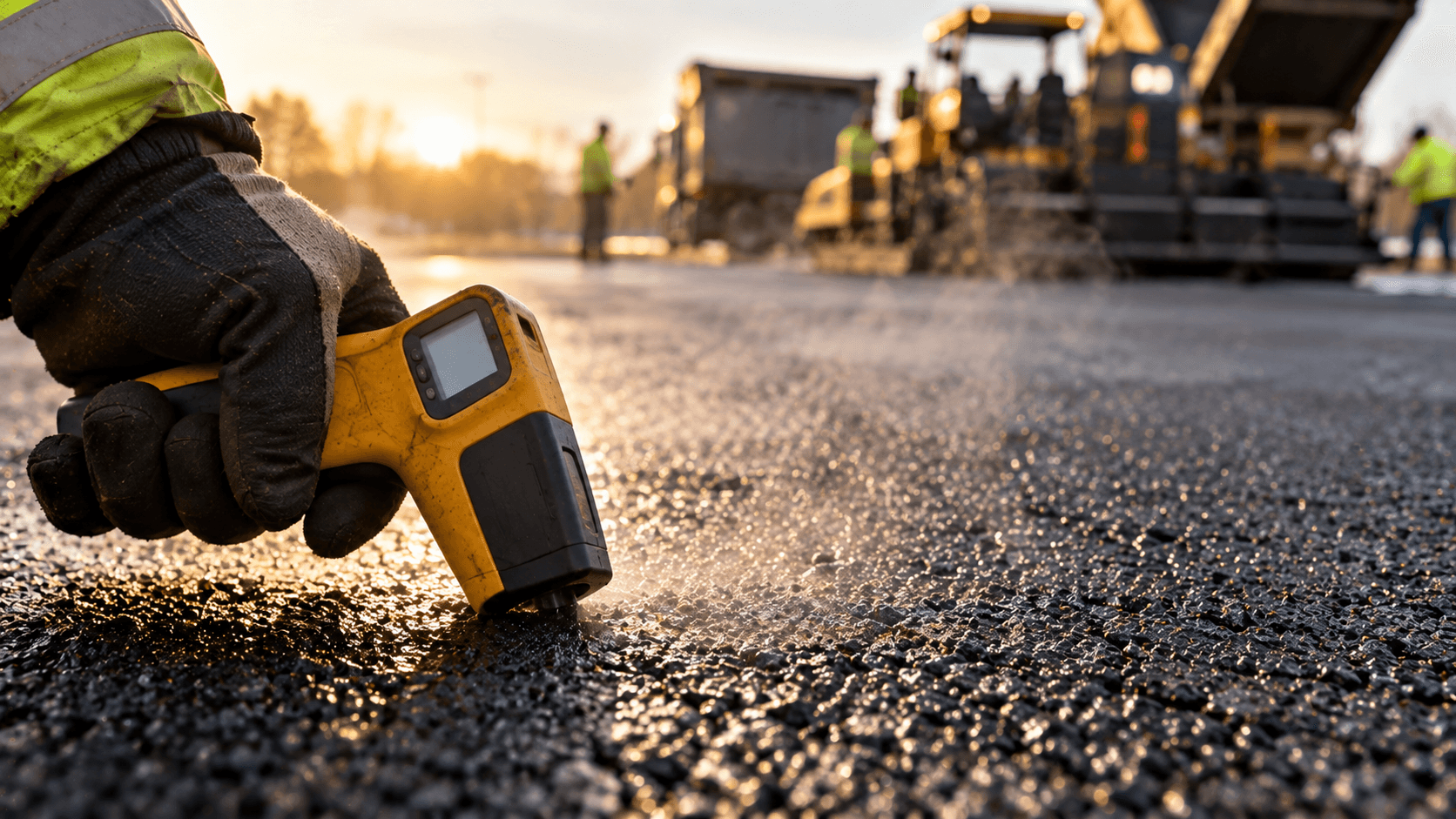
Yes, but the limit is not a single outdoor temperature. According to the Colorado Asphalt Pavement Association's published cold weather guidelines, hot mix asphalt has to stay within a working range of roughly 275 degrees Fahrenheit down to 175 degrees Fahrenheit during compaction, and the crew generally needs at least ten minutes inside that range to reach proper density. Cold air and cold ground shrink that window, so the real question on a cold weather job is not what the thermometer reads, it is whether the mat can be compacted before it drops out of that range.
Why Cold Weather Changes the Job, Not Just the Forecast
Asphalt has to be compacted while it is still hot enough for the aggregate to lock together under the roller. In warm weather, a crew has a reasonably wide window to get that done. In cold weather, that window shrinks, because the mat starts losing heat to the cold air and cold ground the instant it leaves the paver. The same crew, the same mix, and the same equipment produce a different result in the cold, which is why cold weather paving calls for specific adjustments rather than powering through on the usual process.
What Actually Buys Back That Compaction Window?
Raising the Mix Temperature
The Colorado guidelines show the effect directly: raising the delivered mix temperature from 275 degrees Fahrenheit to 325 degrees Fahrenheit extends the usable compaction window from roughly 7 minutes to 12 minutes. That extra five minutes is often the difference between a mat that compacts properly and one that does not.
Increasing Lift Thickness
Thicker lifts hold heat longer than thin ones. The same source shows that increasing lift thickness from 1.25 inches to 2 inches extends the compaction window from about 7 minutes to 17 minutes, a bigger gain than raising mix temperature alone.
Minimizing Haul Time
Every minute between the plant and the paver is heat already spent before compaction even starts. Shorter haul routes and covered trucks preserve more of that window.
Positioning Rollers Closer to the Paver
Compaction has to happen inside the working temperature range, so rollers follow the paver more closely in cold weather, and crews sometimes bring in additional or higher capacity rollers to compact more mat inside the same shortened window.
Using Warm Mix Asphalt
Warm mix asphalt is produced and placed at a lower temperature than standard hot mix to begin with, which is one of the alternatives crews reach for specifically to make cold weather paving more workable.
Where Cold Weather Paving Makes Sense, and Where It Does Not
Cold weather paving is most often right for urgent repairs, small sections, or projects that genuinely cannot wait for spring, not as a routine substitute for warm season scheduling. When Does Paving Season End? A State by State Guide covers how the broader seasonal cutoff is determined for a full project. For most commercial lots, I would rather wait for the right conditions than push a full paving job through marginal cold weather.
What Should a Property Owner Ask Before Approving a Cold Weather Job?
- What mix temperature and lift thickness is being used for this specific job
- How the base and ground temperature were checked before the crew mobilized
- Whether this is a full project or a targeted repair that can reasonably be done in current conditions
- What the realistic expectations are for the surface compared to the same job done in warmer weather
FAQs
What is the coldest temperature asphalt can be paved in?
There is no single outdoor cutoff. Published cold weather guidelines focus on keeping the mat inside a working range of roughly 275 to 175 degrees Fahrenheit for at least ten minutes during compaction, which is achieved through mix temperature, lift thickness, and haul time adjustments rather than a fixed outdoor air reading.
Does cold weather asphalt last as long as warm weather asphalt?
When done correctly, with the right mix temperature and lift thickness adjustments, a cold weather paving job can perform comparably. The risk is not cold weather paving itself, it is cold weather paving done without those adjustments.
Is it more expensive to pave in cold weather?
Often, yes, since higher plant temperatures, covered hauling, additional rollers, and faster compaction schedules add cost compared to a standard warm weather job.
Should a property wait for spring instead of paving in cold weather?
For most full scale commercial paving projects, yes. Cold weather paving is best reserved for urgent repairs or situations that genuinely cannot wait, not as a routine alternative to warm season scheduling.
What is warm mix asphalt and how does it help in cold weather?
Warm mix asphalt is produced and placed at a lower temperature than standard hot mix asphalt. Because it starts the job already closer to its working range, it is one of the materials crews use specifically to make cold weather paving more workable.
Free Site Assessment