
Parking Lot Drainage Problems: Causes, And Fixes
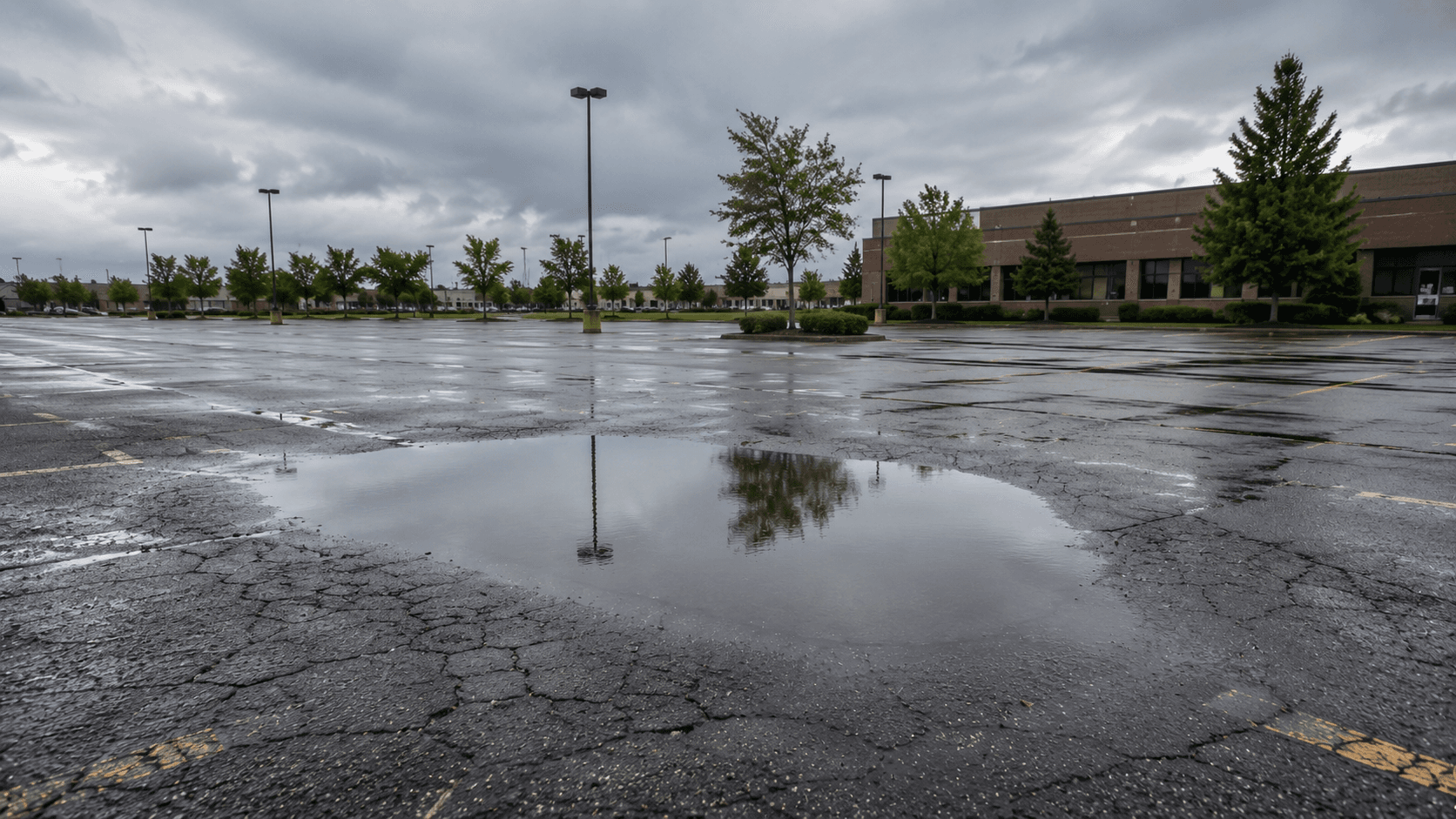
If I had to name the one issue behind more parking lot failures than any other, it wouldn't be traffic, and it wouldn't be age. It's water that doesn't drain.
Nearly every crack, pothole, and base failure I've repaired traces back to water that sat somewhere it shouldn't have. Get drainage right and you prevent most of the expensive problems before they start.
Why Standing Water Is the Real Enemy
Asphalt itself holds up fine against rain falling on it. The damage happens when water doesn't leave when it pools, sits, and has time to work its way down into the pavement.
Once water reaches the base beneath your asphalt, it weakens the material that's supposed to be carrying the load. A saturated base loses strength, and traffic does the rest that's how a puddle turns into a pothole.
What Causes Parking Lot Drainage Problems
A handful of root causes show up again and again:
- Improper original grading. Commercial lots need a slight, consistent slope usually 1–2%to move water toward drains or the lot's edge. Build it flat, or wrong, and water has nowhere to go.
- Settling over time. Asphalt compresses unevenly under years of load, creating low spots that weren't there when the lot was new.
- Clogged or failing drainage structures. Catch basins and drains full of debris simply stop working, even if the grading is fine.
- Base failure. Where the base has shifted or eroded, the surface above it sinks creating a low spot that fills every time it rains.
- Additions that block flow. New curbs, islands, or structures added after the original design can unintentionally redirect water into a dead zone.
How to Spot a Drainage Problem
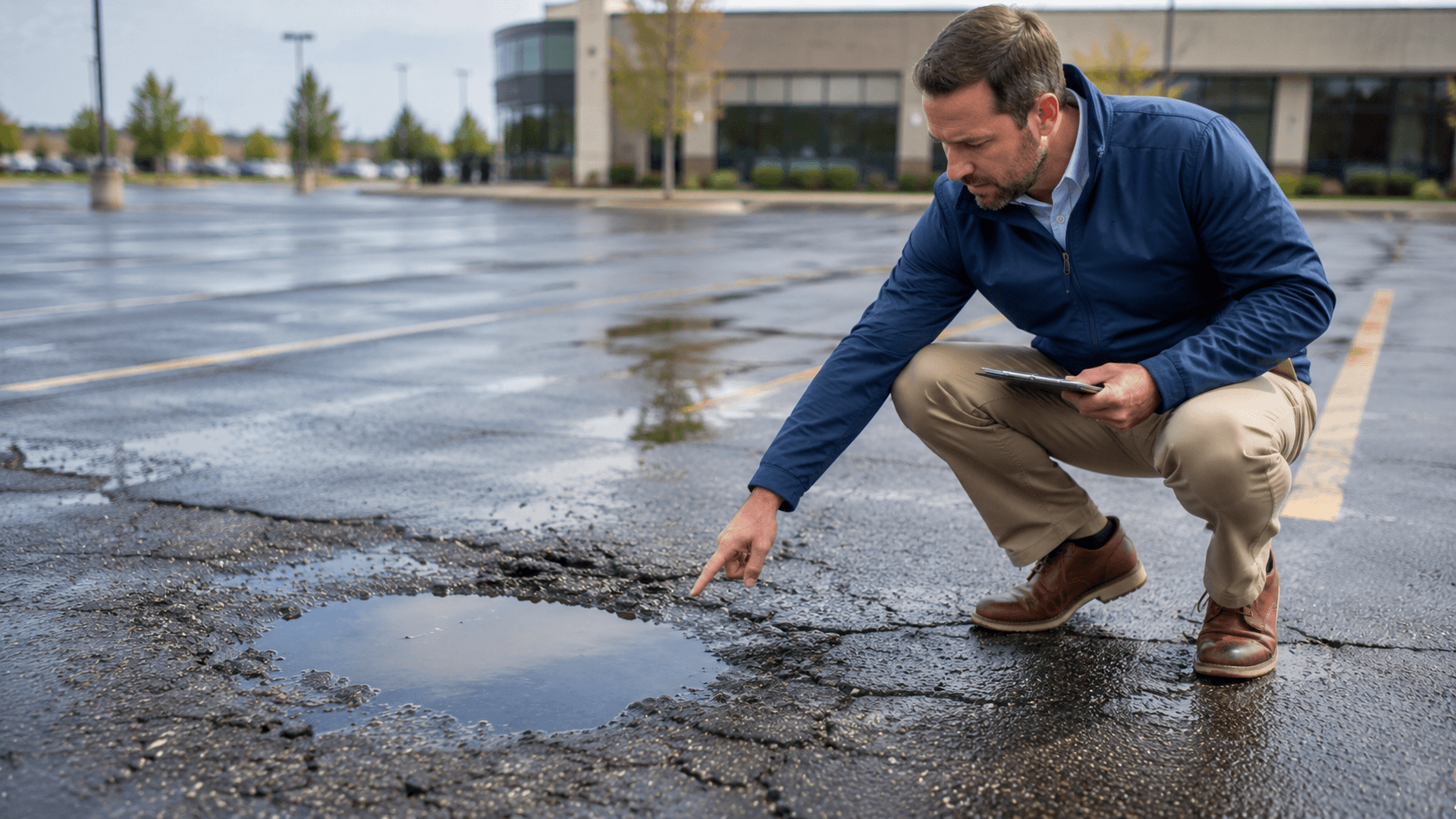
You don't need special equipmentjust check the lot within an hour after a decent rain:
- Water sitting in the same spots repeatedly, rather than draining within a few minutes
- Puddles near building entrances, dumpster pads, or catch basins
- Cracking or potholes concentrated in the same low areas each season
- A visible dip you can see or feel when walking or driving over it
If the same spots keep collecting water rain after rain, that's not bad luck. That's a grading or drainage problem.
How Drainage Problems Get Fixed
The right fix depends on how bad the low spot is and what's causing it:
- Minor surface settlement: A leveling overlay can correct a shallow low spot without a full rebuild.
- Clogged catch basins or drains: Sometimes it's as simple as cleaning out debris so existing drainage structures work again.
- Significant base failure: If the base itself has shifted, the area needs to be excavated, regraded, and rebuilt properlypatching the surface won't hold.
- Poor original design: Occasionally the fix is adding a new catch basin or trench drain where one should have existed from the start.
When we handle asphalt paving or an overlay, grading and drainage are part of the assessment every timenot an afterthought added after the surface is already down.
Why This Matters More Than Owners Realize
Drainage isn't a cosmetic issue. A lot with a persistent low spot will keep cracking and potholing in that exact same area no matter how many times you patch itbecause the root cause was never addressed. Fixing the grading once is almost always cheaper than repairing the same spot every year.
FAQs
Why does water keep pooling in the same spot on my parking lot?
Usually because of a low spot from improper grading, settling, or base failure in that exact location. Patching the surface without correcting the grade means the same spot will keep collecting water and failing again.
How much slope does a commercial parking lot need for proper drainage?
Most commercial lots need a slope of about 1 to 2% to move water effectively toward drains or the lot's edge. Too flat and water sits; too steep and it can erode the surface or create runoff issues.
Can drainage problems be fixed without repaving the whole lot?
Often, yes. Minor settlement can sometimes be corrected with a leveling overlay in just the affected area, and clogged drainage structures may just need cleaning. Full excavation and regrading is only needed where the base itself has failed.
Does standing water really cause potholes?
Yes, it's one of the leading causes. Water that sits on the surface works down into the base, weakening it. Traffic then causes the softened area to collapse, which is exactly how a puddle turns into a pothole.
Ready to Take Action?