
Medical & Healthcare Facility Parking Lot Paving: ADA Rules Get Stricter Here
Quick Answer
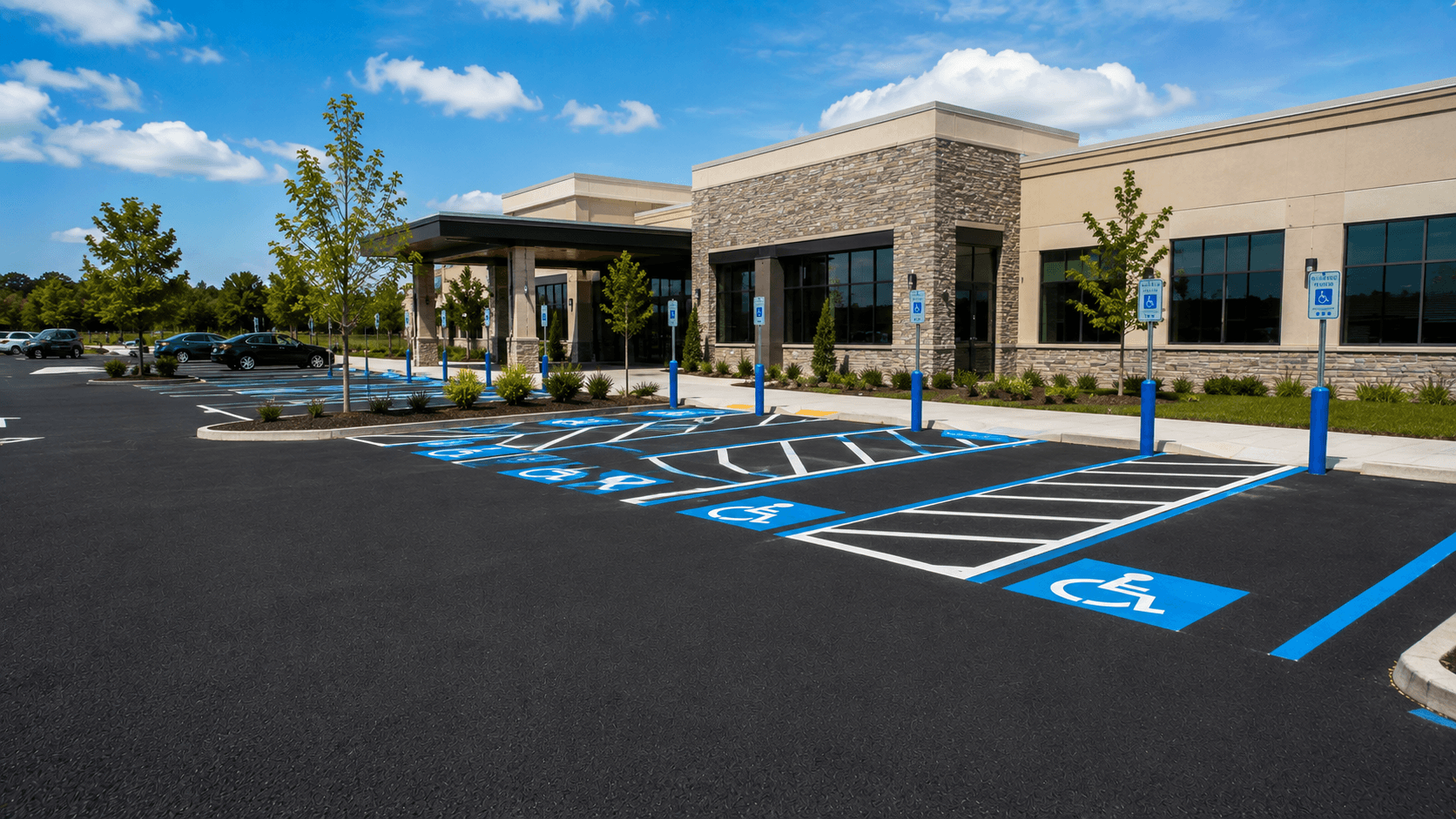
Hospital outpatient facilities must make at least 10% of patient and visitor parking accessible, and outpatient physical therapy or rehabilitation facilities must reach 20%, both well above the standard 2 to 4% most commercial lots require.
Most commercial lots follow the same ADA scoping table. Medical facilities do not get that luxury. The moment a property serves outpatient care, the accessible stall requirement jumps well past what a standard office or retail lot has to provide.
Why Medical Facilities Face Stricter ADA Rules
Under the U.S. Access Board's ADA Standards, hospital outpatient facilities, meaning units providing regular medical treatment without an overnight stay, must make at least 10% of patient and visitor parking accessible. Outpatient physical therapy and rehabilitation facilities treating conditions that affect mobility must reach 20%, since more of their patients are likely to need an accessible space.
| Facility Type | Accessible Parking Requirement |
|---|---|
| Standard commercial lot | Roughly 2–4% (scaled by lot size) |
| Hospital outpatient facility | 10% of patient/visitor parking |
| Outpatient physical therapy / rehab facility | 20% of patient/visitor parking |
| Doctor's office or independent clinic (not in a hospital) | Standard scoping table applies |
Which Medical Facilities Does This Apply To?
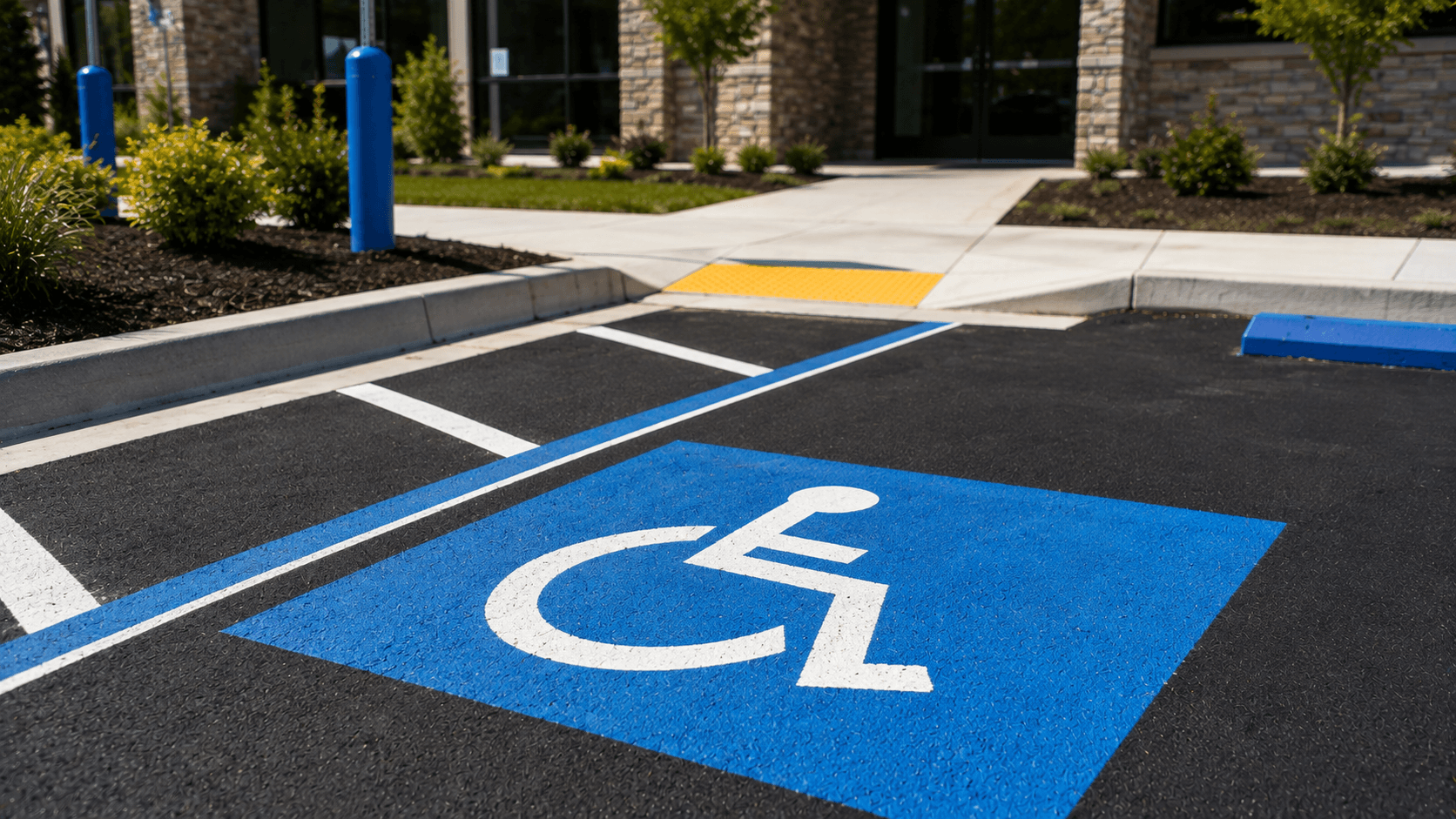
The stricter thresholds apply specifically to units within hospitals providing outpatient treatment, and to freestanding outpatient physical therapy and rehabilitation facilities. A standalone doctor's office or independent clinic not located within a hospital typically follows the standard ADA scoping table used for any other commercial lot, though it's worth confirming with a local code official for the specific facility type and classification.
What This Means for Layout, Not Just Stall Count
- More accessible stalls means more space near the entrance, which changes the overall layout, not just a handful of striped spots.
- The shortest accessible route matters even more here. Patients using these spaces are often the ones least able to travel a long distance to the entrance.
- Van-accessible ratios still apply on top of the higher base percentage, at one of every six accessible spaces, meaning a 20% facility needs a meaningfully higher van-accessible count too.
Why Getting This Wrong Carries More Risk at Medical Facilities
Medical facilities serve a patient population with a higher rate of mobility limitations than the general public, which is exactly why the higher percentages exist. A miscounted lot here isn't just a compliance technicality, it's a real access barrier for patients who need the facility most. It's also one of the more commonly audited property types for ADA parking compliance.
Our ADA parking lot markings guide covers the full stall dimension and signage requirements that apply on top of these percentage rules. When we stripe a medical facility, we confirm the specific classification and current percentage requirement before laying out a single stall.
FAQs
What percentage of parking must be accessible at a hospital outpatient facility?
At least 10% of patient and visitor parking spaces must be accessible at hospital outpatient facilities, well above the roughly 2 to 4% required at a standard commercial lot of similar size.
Do all medical offices need 10% accessible parking?
No. The 10% threshold applies specifically to hospital outpatient facilities. Standalone doctor's offices and independent clinics not located within a hospital typically follow the standard ADA scoping table, though local code should be confirmed for the specific facility classification.
Why do rehabilitation facilities need 20% accessible parking?
Outpatient physical therapy and rehabilitation facilities treat a patient population where mobility limitations are especially common, which is why the ADA Standards set their accessible parking requirement at 20%, double the hospital outpatient threshold.
Does the van-accessible ratio change at medical facilities?
The one-in-six van-accessible ratio still applies, but since the overall accessible stall count is higher at medical facilities, the total number of van-accessible spaces required is also higher than at a standard commercial lot.
Free Site Assessment