
Infrared Asphalt Repair vs. Cold Patch: Which Lasts?
If you've paid to fix the same pothole more than once, this one's for you.
Most potholes get “fixed” with a cold patch , shovel some material in, tamp it down, done. It's fast and cheap. It's also why that pothole keeps coming back. There's a better way, and it's worth understanding before you approve the next repair.
I'm Gabriel, founder of FineLines. We repair commercial lots across 45+ states, so let me break down the two methods honestly , what each does, what it lasts, and when to use which.
Cold Patch: The Quick Fix
Cold patch is exactly what it sounds like , pre-mixed asphalt poured cold into a pothole and compacted.
- Pros: cheap, fast, works in any weather, good for emergencies.
- Cons: it doesn't bond to the surrounding asphalt. It just sits in the hole.
That lack of a bond is the whole problem. Water works into the seam around the patch, freezes, and pops it right back out , often within a season. Cold patch is a band-aid, not a repair. Useful to kill a hazard fast; not something to rely on.
Infrared Repair: The Lasting Fix
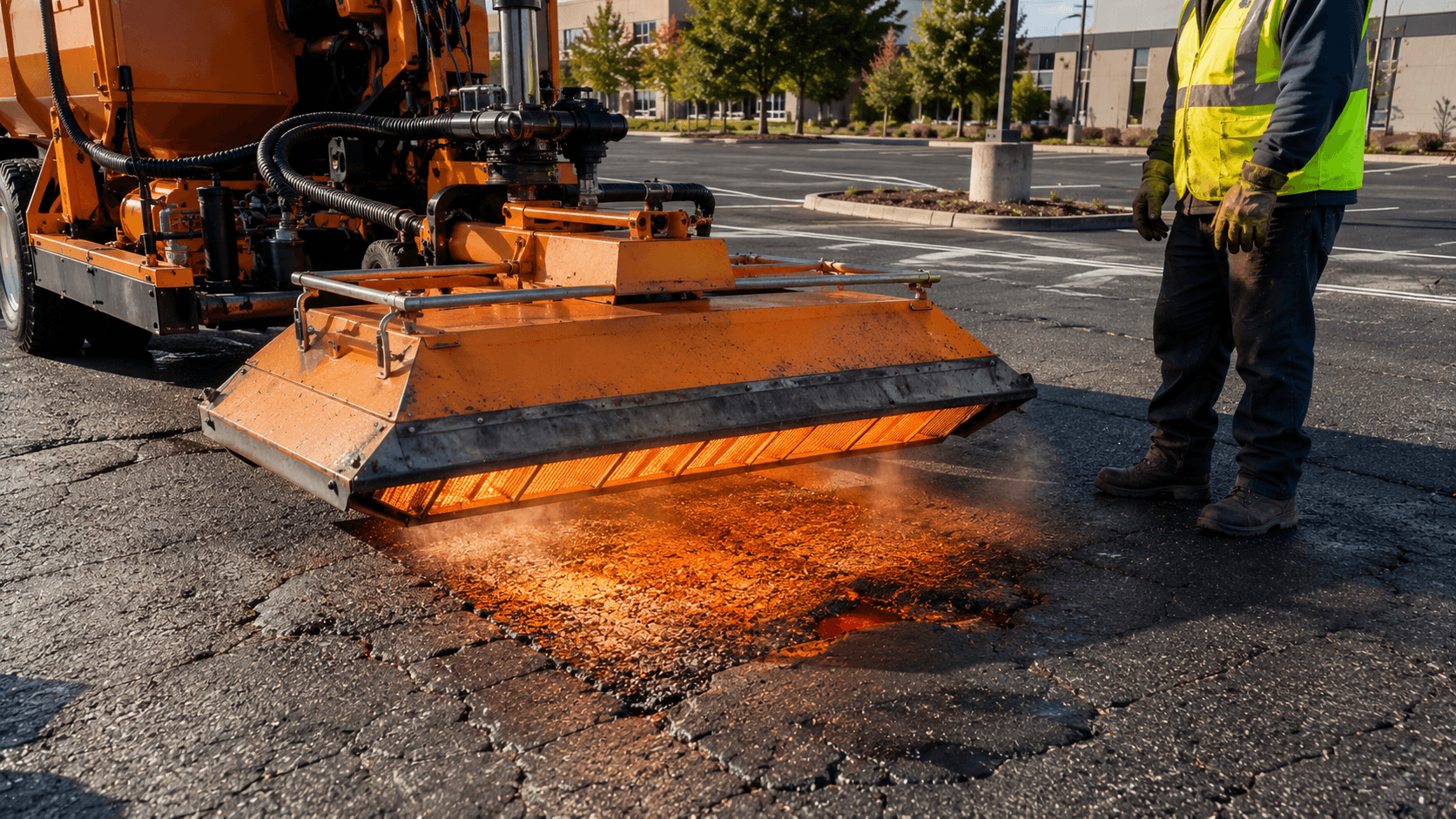
Infrared repair takes a different approach. Instead of just filling the hole, it reworks the existing asphalt. Here's how it works:
- An infrared heater warms the damaged area for about 10 minutes, softening the existing asphalt to around 325°F.
- The softened area is raked, fresh hot mix is blended in, and a rejuvenator restores the old binder.
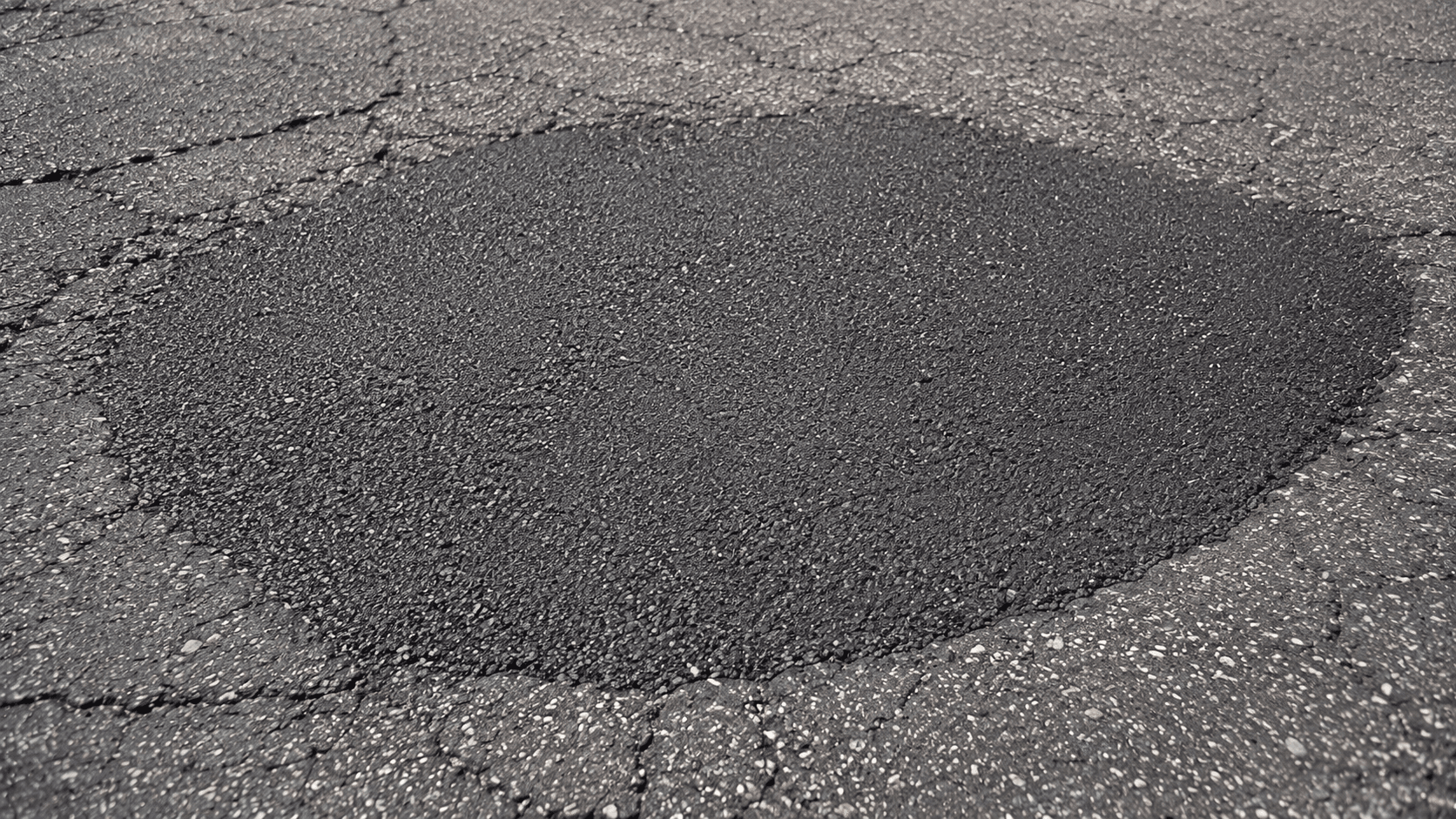
- It's leveled and compacted , bonding seamlessly with the surrounding pavement.
The result is a repair with no cold joint , no seam for water to sneak into. It becomes part of the lot instead of a patch sitting on top of it. That's why infrared repairs last years, not months, and hold up far better through freeze-thaw.
Side by Side
| Method | Bonds to pavement? | Typical lifespan | Best for |
|---|---|---|---|
| Method Cold patch | No | 1–3 years | Emergencies, temporary fixes |
| Infrared repair | Yes(Seamless) | 5+ years | Potholes & surface damage, sound base |
| Full-depth repair | Yes (rebuilt) | Long-term | Failed base underneath |
When Each One Makes Sense
No method is right for everything. Here's how I call it on site:
- Cold patch , when you need a hazard gone today and a lasting fix scheduled later. A stopgap, not a solution.
- Infrared repair , the best value for potholes, utility cuts, and surface damage where the base underneath is still solid. This covers most commercial pothole repairs.
- Full-depth repair , when the base itself has failed. No surface method, infrared included, will hold over a bad base.
The key is honest assessment. As the City of Chicago explains, potholes form when water and freeze-thaw break down the pavement from below , so a surface patch over a failed base will fail too. Infrared is excellent, but it's a surface fix.
The Cost Reality
Cold patch looks cheapest , until you count how many times you pay for it. A patch that reopens every year costs more over five years than one proper infrared repair that holds.
That's the math I walk owners through. The cheapest repair and the least expensive repair are rarely the same thing. When we handle repairs, we match the method to the damage and tell you straight which one your lot actually needs , not just the fastest one to invoice.
FAQs
Is infrared asphalt repair better than cold patch?
For a lasting fix, yes. Infrared bonds seamlessly with the surrounding pavement, so there's no seam for water to get in, and it lasts years. Cold patch doesn't bond and typically reopens within a season. Cold patch is best kept for emergencies.
How long does an infrared asphalt repair last?
On a sound base, an infrared repair typically lasts 5 years or more , far longer than cold patch. Because it's thermally bonded with no cold joint, it resists the water intrusion and freeze-thaw that break patches apart.
Can infrared repair fix any pothole?
No. Infrared is a surface-level repair, ideal when the base underneath is still solid. If the base has failed , widespread cracking, recurring potholes, settling , you need full-depth repair or replacement instead.
Why does my cold-patched pothole keep coming back?
Because cold patch doesn't bond to the surrounding asphalt. Water gets into the seam around it, freezes, and pushes it out , often within a season. A seamless repair like infrared, or a full-depth fix if the base failed, is what actually holds.
Free Site Assessment