
Full-Depth Reclamation For Aging Connecticut Industrial Lots
Quick Answer
Connecticut has some of the oldest infrastructure in the country, much of it over 50 years old, according to the American Society of Civil Engineers. Industrial properties built on that older infrastructure often need full-depth reclamation rather than a standard overlay, since the base itself has frequently outlived its intended life.
A lot of Connecticut's industrial buildings were built decades ago, on base infrastructure that was never designed for today's vehicle loads. Overlaying a failed base doesn't fix that. It just delays the same problem at a higher eventual cost.
I am Gabriel, founder of FineLines. We work on industrial properties across Connecticut, so here is when full-depth reclamation is genuinely the right call for an aging lot.
Connecticut's Infrastructure Age Is a Real, Documented Factor
The American Society of Civil Engineers' Connecticut Infrastructure Report Card states plainly that the state has some of the oldest infrastructure in the country, much of it over 50 years old and beyond its intended life. Industrial properties, particularly in the state's historic manufacturing centers, often sit on base and drainage infrastructure from that same era.
Why This Matters for Overlay vs. Reclamation Decisions
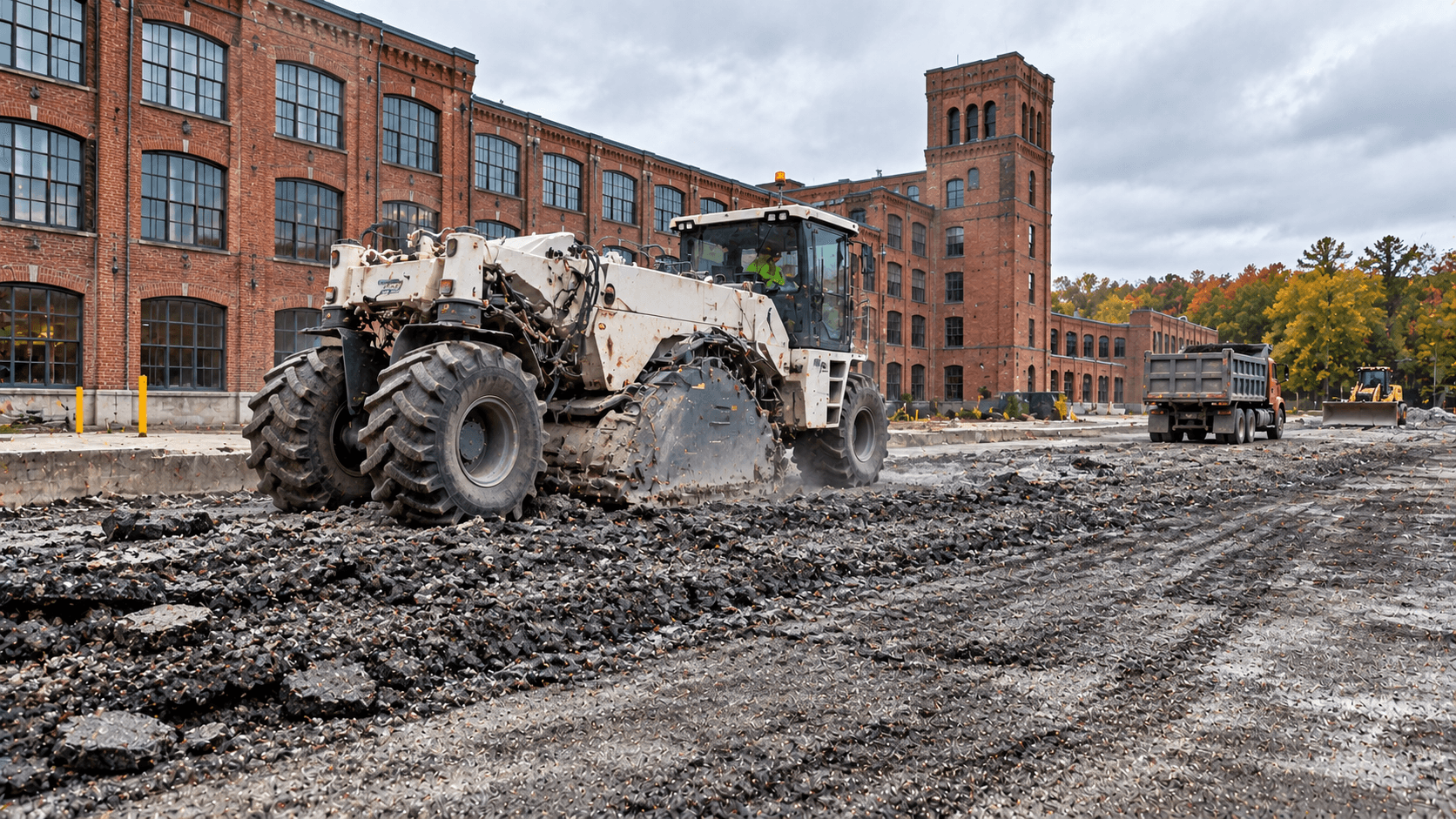
An overlay works well when the base underneath is still structurally sound. On a lot with base infrastructure genuinely approaching or past 50 years old, that assumption doesn't always hold. Full-depth reclamation pulverizes the existing asphalt and a portion of the base, then rebuilds it as a new, stabilized foundation, addressing the age problem directly rather than paving over it.
| Base Condition | Recommended Approach |
|---|---|
| Base under 25 years old, structurally sound | Standard overlay |
| Base 25–50 years old, showing wear | Assessment needed before deciding |
| Base over 50 years old or showing structural failure | Full-depth reclamation typically recommended |
Signs an Industrial Lot's Base May Have Aged Out
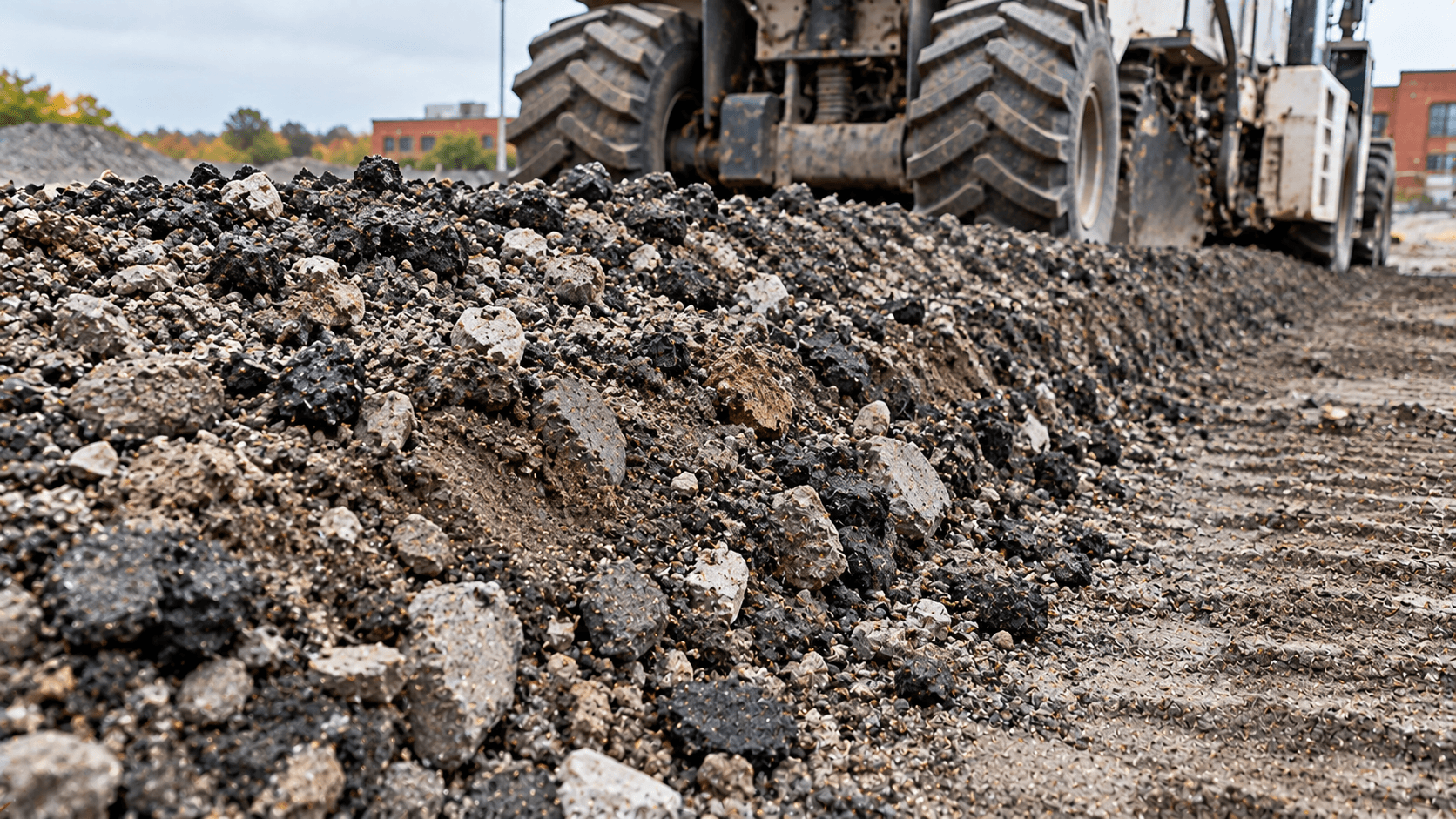
- Recurring potholes in the same spots, despite repeated surface-level patching.
- Alligator cracking spread across a large area, not just isolated sections.
- Visible rutting under heavy vehicle traffic, particularly in areas with repeated truck loads.
- A lot that's already been overlaid once and is failing again in roughly the same areas.
Our cold milling vs. full-depth reclamation guide covers the full technical distinction between these two approaches. If your industrial property is in Connecticut, particularly in an older manufacturing area, we assess the actual base condition before recommending either option.
FAQs
Why does Connecticut have more aging pavement infrastructure than other states?
According to the American Society of Civil Engineers, Connecticut has some of the oldest infrastructure in the country, much of it built over 50 years ago and now beyond its originally intended service life.
How do I know if my industrial lot needs full-depth reclamation instead of an overlay?
Signs include recurring potholes in the same locations despite patching, widespread alligator cracking, visible rutting under heavy loads, and a lot that's already failed again after a previous overlay. A site assessment confirms actual base condition before recommending either approach.
Is full-depth reclamation more expensive than an overlay?
Upfront, yes. But when the base has genuinely aged out or failed, an overlay doesn't resolve the underlying problem, it delays it, often resulting in paying for the overlay and the eventual reclamation both.
Does an older building automatically mean the pavement needs full-depth reclamation?
Not automatically. Base condition, not building age alone, determines the right approach. Some older properties have bases that have held up well, which a proper assessment will confirm before recommending a full rebuild.
Free Site Assessment