
Why Connecticut's Shoreline Pavement Fails Faster
Quick Answer
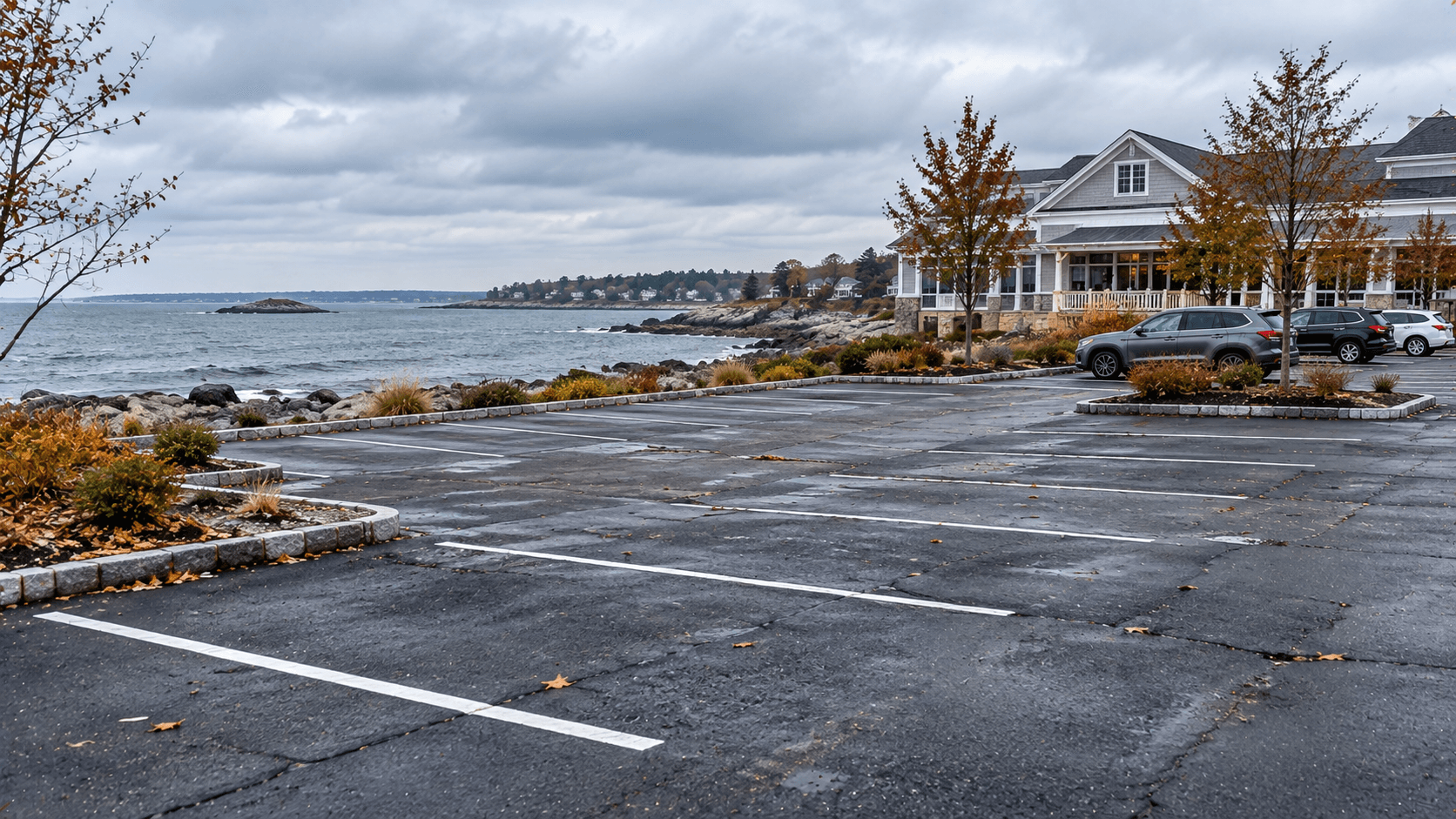
Connecticut shoreline properties face two damaging forces at once: salt-laden air off Long Island Sound and the same freeze-thaw cycles every Connecticut property deals with. The combination accelerates binder breakdown and edge deterioration faster than either force causes on its own.
Two commercial lots built the same year, same contractor, same mix design, one three miles inland, one facing Long Island Sound. The shoreline lot needs attention years sooner. That's not bad luck, it's a specific, compounding mechanism.
I am Gabriel, founder of FineLines. We maintain commercial properties along the Connecticut coast, so here is what's actually happening to shoreline pavement, and why it needs a different maintenance rhythm than a lot in Hartford or Waterbury.
Why Salt Air Alone Is a Real Threat to Asphalt
Coastal wind carries fine salt particles that settle on every exposed surface, pavement included. Connecticut's own environmental research confirms this coastal exposure is a real, ongoing factor, the state's Department of Energy and Environmental Protection documents the constant environmental pressure Long Island Sound's coastal conditions place on shoreline properties. That salt exposure accelerates oxidation of the asphalt binder, the material that holds aggregate together, making the surface more brittle and more prone to cracking and raveling than the same asphalt would be a few miles inland.
Why Freeze-Thaw Hits Harder When Salt Air Is Already in the Mix
Connecticut winters put every commercial lot through repeated freeze-thaw cycles, water enters a crack, freezes, expands, and widens it, then thaws and repeats. On a shoreline property, that cycle is working on a surface that's already more brittle from salt exposure, which means cracks form faster and grow wider with each cycle than they would on an inland lot experiencing the identical freeze-thaw pattern.
| Factor | Inland Connecticut Lot | Shoreline Connecticut Lot |
|---|---|---|
| Binder oxidation rate | Standard | Accelerated by salt exposure |
| Freeze-thaw crack growth | Standard progression | Faster, working on already-brittle surface |
| Recommended seal coat cycle | 2–3 years | Often 2 years or sooner |
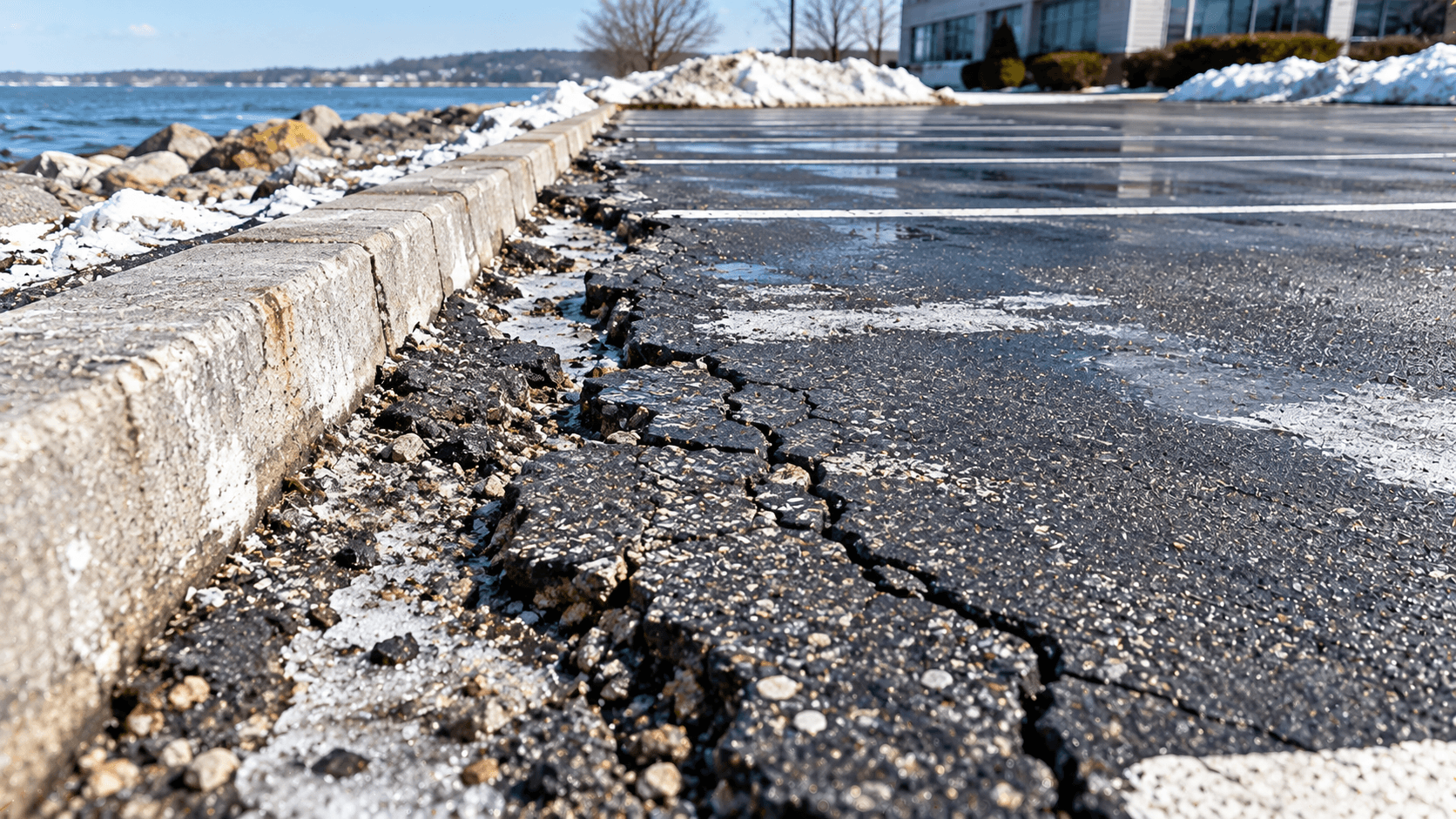
| Edge and joint deterioration | Standard | Elevated, salt concentrates at edges and low points |
What This Means for Maintenance Timing
- Seal coat on a tighter cycle. A 2-year cycle is often the right call for shoreline properties, rather than the 2 to 3 year cycle that works fine inland.
- Inspect edges and low points specifically. Salt tends to concentrate where water collects and runs off, making these the first places deterioration shows up.
- Crack fill before winter without exception. On a surface already more brittle from salt exposure, an unfilled crack heading into freeze-thaw season is a bigger risk than the same crack would be inland.
Our guide to freeze-thaw damage in the Northeast covers the general freeze-thaw mechanics that apply statewide. If your property sits along the Connecticut coast specifically, we build the maintenance schedule around both forces working on your lot at once, not just one of them.
FAQs
Why does pavement near the Connecticut shoreline deteriorate faster?
Salt-laden air off Long Island Sound accelerates oxidation of the asphalt binder, making the surface more brittle. That brittleness compounds with the same freeze-thaw cycles every Connecticut property faces, so cracks form and grow faster than on an inland lot experiencing the same winter.
How often should a Connecticut shoreline parking lot be seal coated?
Often every 2 years rather than the 2 to 3 year cycle that works for inland Connecticut properties, since salt exposure accelerates the binder breakdown that seal coating protects against.
Which parts of a shoreline lot deteriorate first?
Edges, joints, and low points where water collects tend to show damage first, since salt concentrates in these areas as water runs off or evaporates, leaving a higher salt concentration behind.
Is crack filling more important on shoreline properties than inland ones?
It's important everywhere, but the stakes are higher on shoreline properties specifically because the surface is already more brittle from salt exposure, so an unfilled crack heading into winter has less margin before it becomes a larger problem.
Free Site Assessment