
The Commercial Parking Lot Maintenance Schedule Every Property Manager Needs
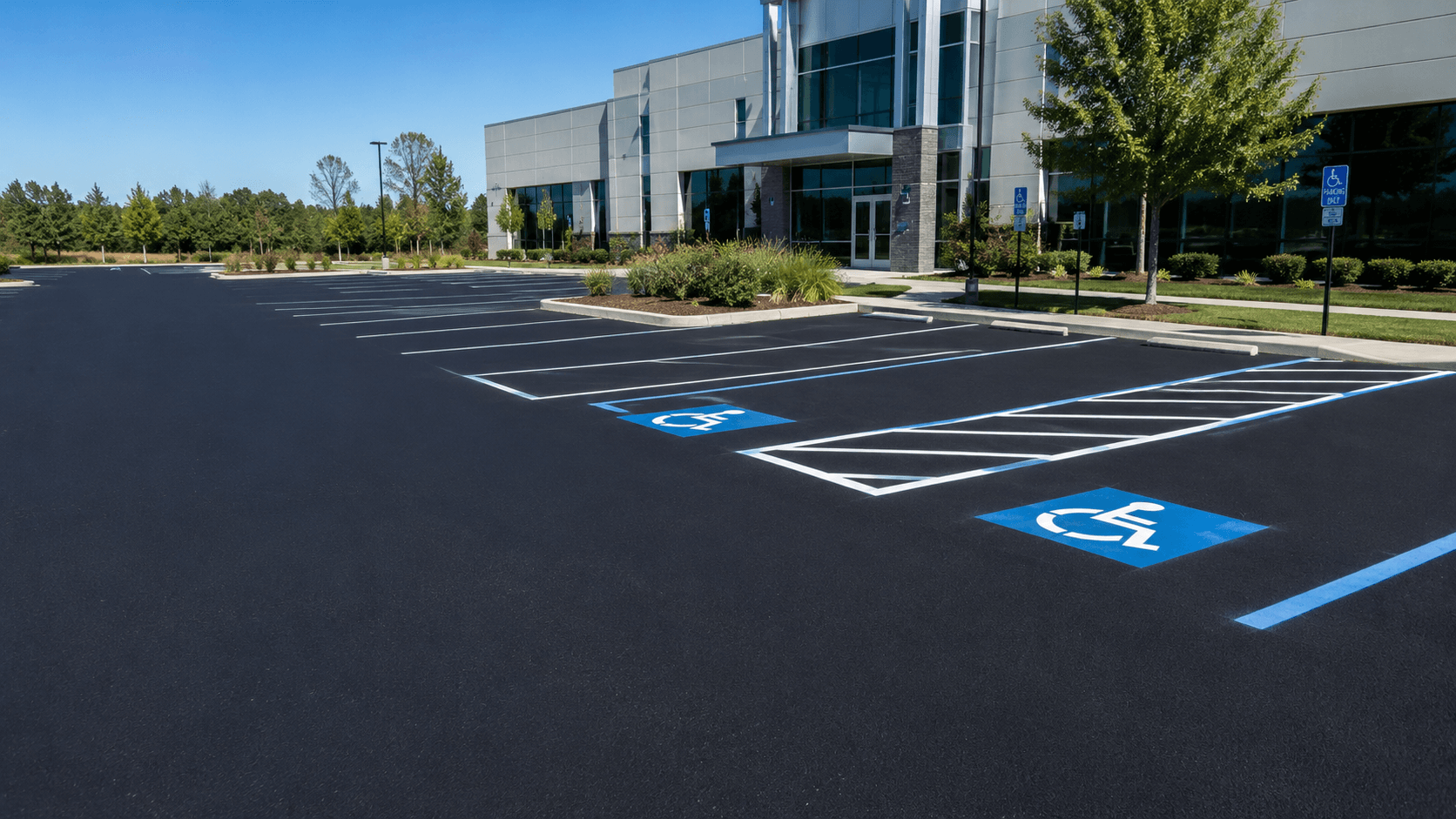
Why a Schedule Beats Reacting
Pavement doesn't fail in a straight line. It holds up well for years, then drops off a cliff. Catch problems on the way down and they're cheap. Wait until the bottom and you're looking at full reconstruction.
The numbers back this up. The Federal Highway Administration notes that every dollar spent on pavement preservation can save up to six dollars down the road.
That's the whole case for a schedule: small, planned spending now instead of a big, forced bill later.
The Commercial Parking Lot Maintenance Schedule
Here's the schedule I'd hand any property manager. Save it, budget around it, and your lot will outlast every neglected one nearby.
| Task | How often | Why it matters |
|---|---|---|
| Sweeping & cleaning | Monthly to quarterly | Clears debris and chemicals that break down asphalt |
| Visual check | Monthly | Spot new cracks, potholes, and drainage issues early |
| Full inspection | Spring & fall (2×/yr) | Find winter damage; prep before the next freeze |
| Crack filling | As cracks appear (~yearly) | Keeps water out of the base, the #1 prevention step |
| Re-striping | Every 1–2 years | Safety, ADA compliance, and curb appeal |
| Seal coating | Every 2–3 years | Blocks water and UV; slows the whole aging process |
| Resurfacing / overlay | Every 8–15 years* | Restores a worn surface when the base is still sound |
| Pothole / full-depth repair | As needed | Stops small failures before they spread |
*Depends on traffic, climate, and condition.
Walk Through It, Task by Task
Quick notes on each, in plain terms.
Ongoing, Keep It Clean and Watch the Drains
Sweep regularly and keep an eye out after storms. Debris traps moisture, and oil and chemicals soften asphalt. Most importantly, make sure water drains off the lot. Standing water is the single biggest enemy your pavement has.
Twice a Year, Inspect and Fill Cracks
Walk the lot every spring (to catch winter damage) and every fall (before the freeze). Fill any new cracks while they're small. Crack filling is the cheapest, highest-return thing you can do, it stops water before it ever reaches the base.
Every 1–2 Years, Re-Stripe
Faded lines aren't just an eyesore. They create traffic confusion and can put your ADA markings out of compliance. A fresh re-stripe is quick, affordable, and instantly makes a property look maintained.
Every 2–3 Years, Seal Coat
This is your big protective step. Seal coating lays a barrier over the whole surface that blocks water, UV, and chemical damage, the three things that age asphalt fastest. Skip it and you'll be resurfacing far sooner.
Every 8–15 Years, Resurface
When the surface is worn but the base is still solid, an overlay restores the lot at a fraction of replacement cost. Stay on the steps above and you push this out as far as possible.
As Needed, Repairs
Potholes and failed sections don't wait for the calendar. Fix them properly and promptly, a small repair today is a cheap repair. Left alone, it spreads.
A Few Tips for Property Managers
The schedule is the foundation. These habits make it work in the real world:
- Budget for it annually. Put maintenance in the yearly budget so it's planned, not a surprise emergency line item.
- Document everything. Keep records of inspections and work done. It helps with ownership reporting, warranties, and liability if a claim ever comes up.
- Catch it early. The whole game is intervening while problems are small. A ten-minute walk-through saves five-figure repairs.
- Use one contractor across properties. If you manage lots in multiple states, one paving partner means one standard and one call, instead of chasing a different contractor in every market.
That last one is exactly why we built FineLines the way we did: one company that handles every commercial property you own, the same way, everywhere.
FAQs
How often should a commercial parking lot be maintained?
Think in layers: clean and inspect regularly, fill cracks and inspect fully twice a year, re-stripe every 1–2 years, seal coat every 2–3 years, and resurface every 8–15 years. Repairs happen as needed. Following that rhythm is what stretches a lot's life to 25+ years.
What's the most important parking lot maintenance task?
Crack filling and seal coating, because both stop water from reaching the base, and water in the base is what destroys pavement. If you only budget for two things, budget for those.
How much should I budget for parking lot maintenance?
It varies by lot size and condition, but preventive maintenance like crack filling and seal coating costs pennies per square foot, while reconstruction runs dollars per square foot. A small annual maintenance budget almost always beats a large reactive one. We can give you a real number after a site visit.
Can one contractor handle all my parking lot maintenance?
Yes, and it's the easier way to manage it. One contractor that handles inspections, crack filling, striping, seal coating, repairs, and resurfacing keeps everything on one schedule and one standard. FineLines does exactly that for property owners across 45+ states.
Free Site Assessment