
Best Time of Year to Seal Coat a Commercial Parking Lot
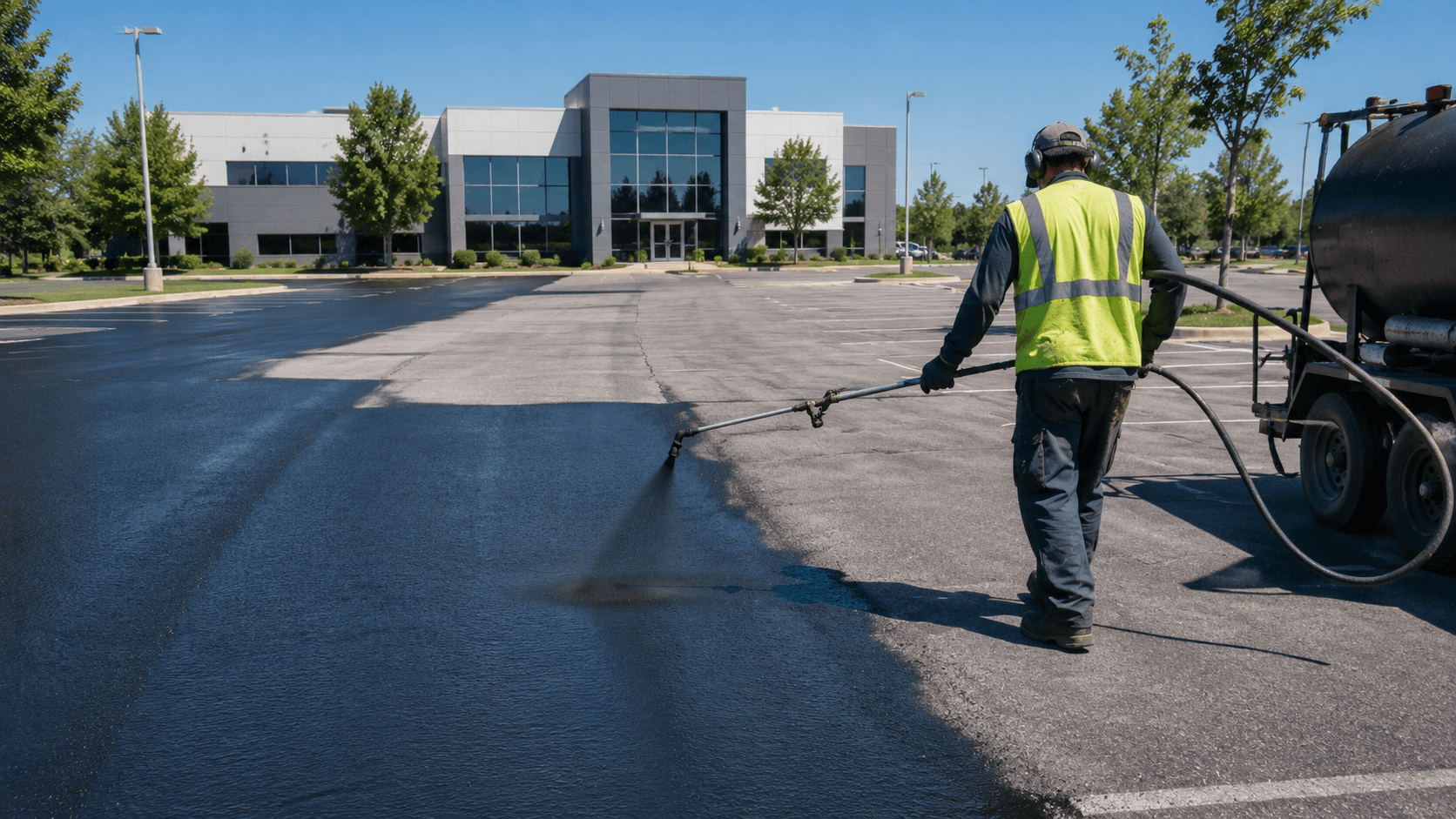
People ask me all the time whether their lot needs seal coating. Almost nobody asks the question that matters just as much: when.
Seal coating is one of those jobs where timing isn't a detail, it's the whole game. Lay it down in the wrong conditions and it won't cure, won't bond, and won't last, no matter how good the product or the crew.
It Comes Down to Temperature
The single biggest factor is heat; and not just the air.
For seal coat to cure properly, you generally need:
- Air and surface temperature at or above 50°F; and rising, not dropping
- Temps that stay above 50°F overnight, ideally for 24 hours after application
- A sweet spot of roughly 50°F to 90°F
That surface part trips people up. The air can read 55°F while the asphalt is still cold from the night before. A good crew checks the pavement temperature, not just the forecast.
It Also Has to Stay Dry
Seal coat is water-based until it cures. Add more water and you've got a problem.
- No rain for at least 24 hours before -the surface has to be dry going in
- No rain for 24 to 48 hours after so it can cure
- Low humidity helps; high humidity and morning dew slow curing way down
This is why fall mornings get tricky. Even on a dry day, heavy dew can settle on the lot and wreck a cure.
The Sweet Spot: Late Spring to Early Fall
Put temperature and dryness together and you land on the same answer most years: late spring through early fall.
Here's roughly how the window shifts by region:
| Region | Best seal coating window |
|---|---|
| Northeast / Midwest | Late May – September |
| Mid-Atlantic | May – October |
| Southeast | April – October |
| Southwest | March – November |
Peak summer is prime time almost everywhere; long days, warm pavement, low rain odds. Exactly what a good cure needs.
Why Winter and Late Fall Don't Work
- Winter: Too cold. Below 50°F the sealer simply won't cure, it stays tacky, peels, and fails. Snow and salt only make it worse.
- Late fall: The trap season. Afternoons feel fine, but temperatures drop fast at night and dew rolls in early. The lot can't finish curing before it cools off. Cutting the season too close is one of the most common timing mistakes I see.
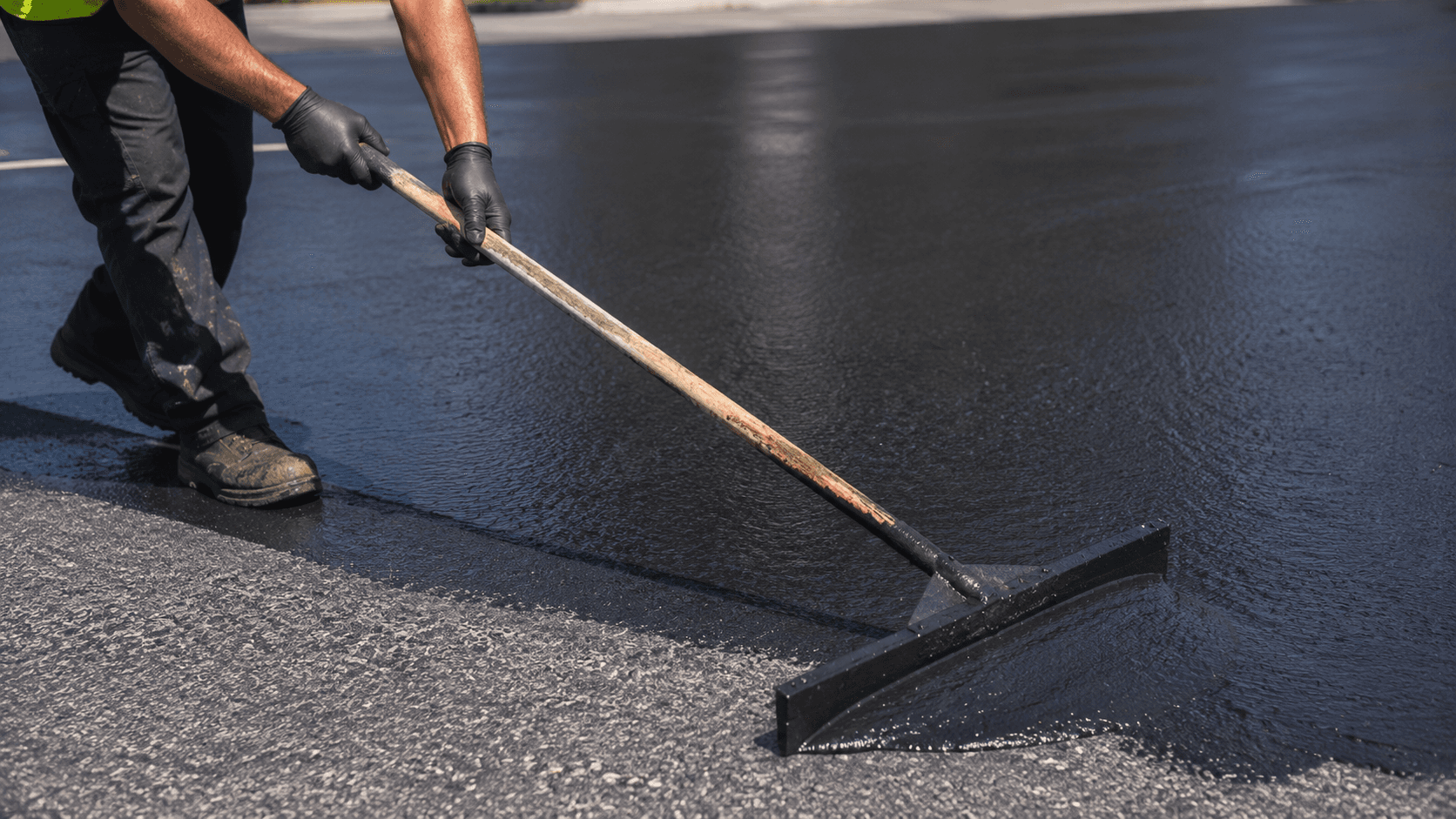
Your Climate Sets Your Calendar
We pave in 45+ states, and no two regions run on the same schedule. A lot in Florida has a very different window than one in Ohio.
If you want to plan ahead, check your area's seasonal averages on NOAA's U.S. Climate Normals. It shows when your region reliably stays warm and dry, and that's your seal coating window.
Southern lots get a longer season but have to dodge summer storms and extreme midday heat. Northern lots have a tighter window, so booking early matters more.
One More Rule: New Asphalt Needs to Wait
If your lot was just paved, don't rush the first seal coat. Fresh asphalt needs 6 to 12 months to cure before it's sealed. Seal it too soon and you trap oils in the pavement and the coat won't bond.
So a lot newly paved in spring? Its first seal coating usually lands the following year. We'll tell you exactly when your surface is ready.
Book Before the Rush
Here's the practical part nobody mentions. Because the good window is only a few months long, every property owner wants the same dates; and quality contractors fill their summer calendars fast.
If you know your lot needs seal coating this year, get the assessment done in late winter or early spring. That way you lock a spot in the prime window instead of scrambling for whatever's left in October.
FAQs
What temperature does it need to be to seal coat?
Generally 50°F and rising; for both the air and the pavement surface; and it should stay above 50°F overnight so the coat can cure. The ideal range is about 50°F to 90°F. A good crew checks surface temperature, not just the air forecast.
Can you seal coat a parking lot in winter?
No. Below 50°F the sealer won't cure properly — it stays soft and peels. In cold-winter regions, seal coating shuts down for the season and picks back up in late spring.
How long does seal coat take to dry?
It's usually dry to the touch within a few hours, but it needs 24 to 48 hours to cure before traffic, longer in cool or humid conditions. We give you the exact window so you can plan lot access.
How soon can a newly paved lot be seal coated?
Wait 6 to 12 months. New asphalt needs time to cure before its first seal coat, and sealing too early stops it from bonding. We confirm when your specific surface is ready.
Free Site Assessment