
Why Milling Is Harder to Schedule in New York City
Quick Answer
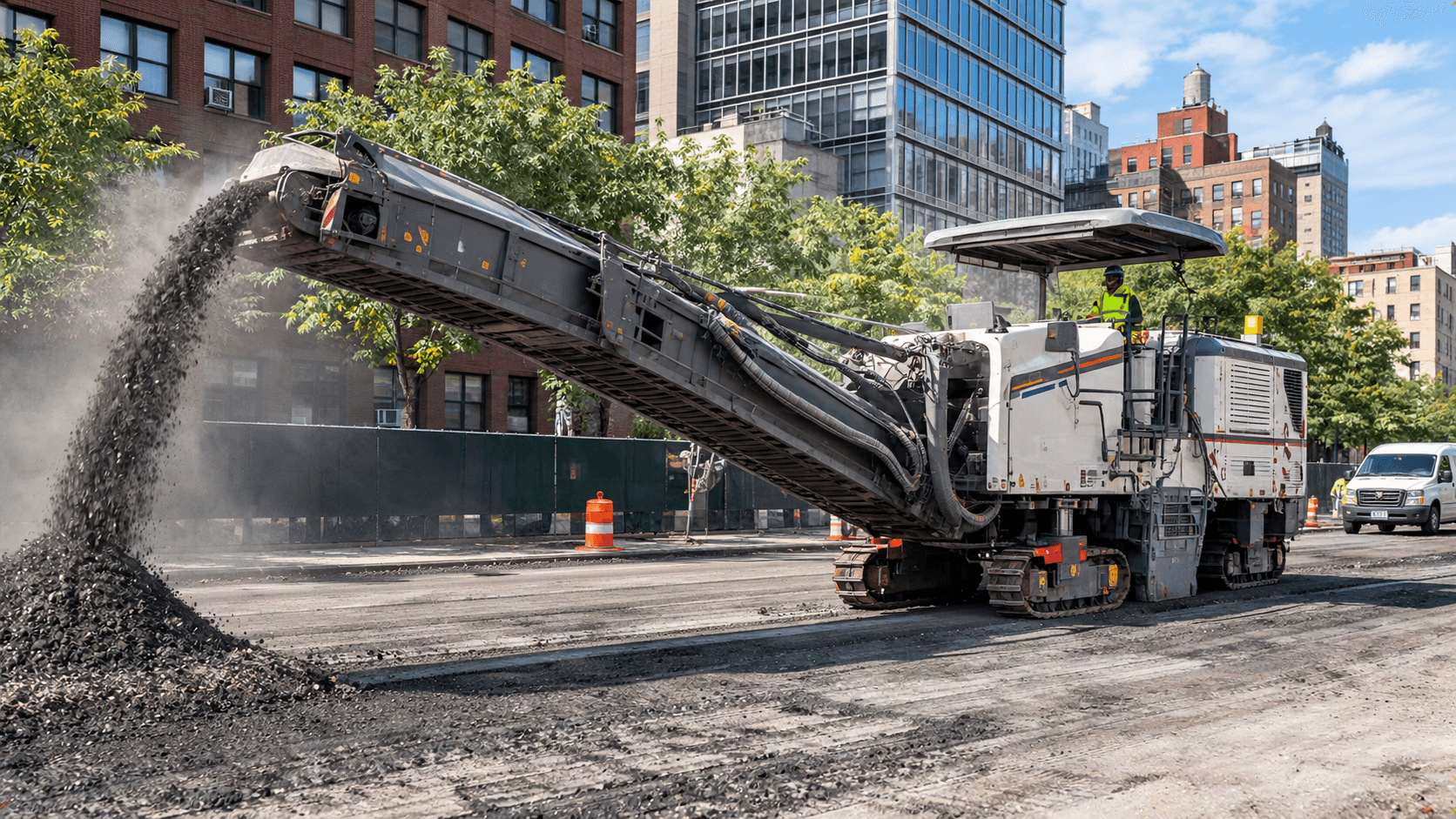
NYC restricts construction equipment use to 7am to 6pm on weekdays without a special permit, and milling is one of the loudest operations in paving, which makes scheduling, noise mitigation, and debris hauling through city streets a bigger planning factor here than almost anywhere else.
Milling is one of the loudest things we do on any job site. In most places, that's just a fact of the work. In New York City, it's a scheduling constraint with real legal weight behind it.
I am Gabriel, founder of FineLines. We mill commercial properties across NYC, so here is what actually changes when the job site is a dense city block instead of a suburban lot.
NYC's Construction Noise Rules, and Why Milling Runs Into Them
Under the NYC Noise Code, construction equipment is generally restricted to use between 7am and 6pm on weekdays. Any work outside those hours requires an after-hours authorization from the Department of Buildings, along with a filed Construction Noise Mitigation Plan. Milling machines are among the loudest equipment used in commercial paving, which makes this restriction a genuine planning factor, not a technicality.
What This Means for Scheduling a Milling Project
- Work gets planned within the 7am to 6pm weekday window by default, since that avoids the need for a separate after-hours authorization.
- If overnight or weekend work is genuinely necessary, an after-hours variance and noise mitigation plan need to be filed with the Department of Buildings before work begins, not during.
- Properties near residential buildings may need additional noise mitigation measures regardless of the hour, given how milling equipment carries in dense areas.
Debris Hauling Through Dense City Streets
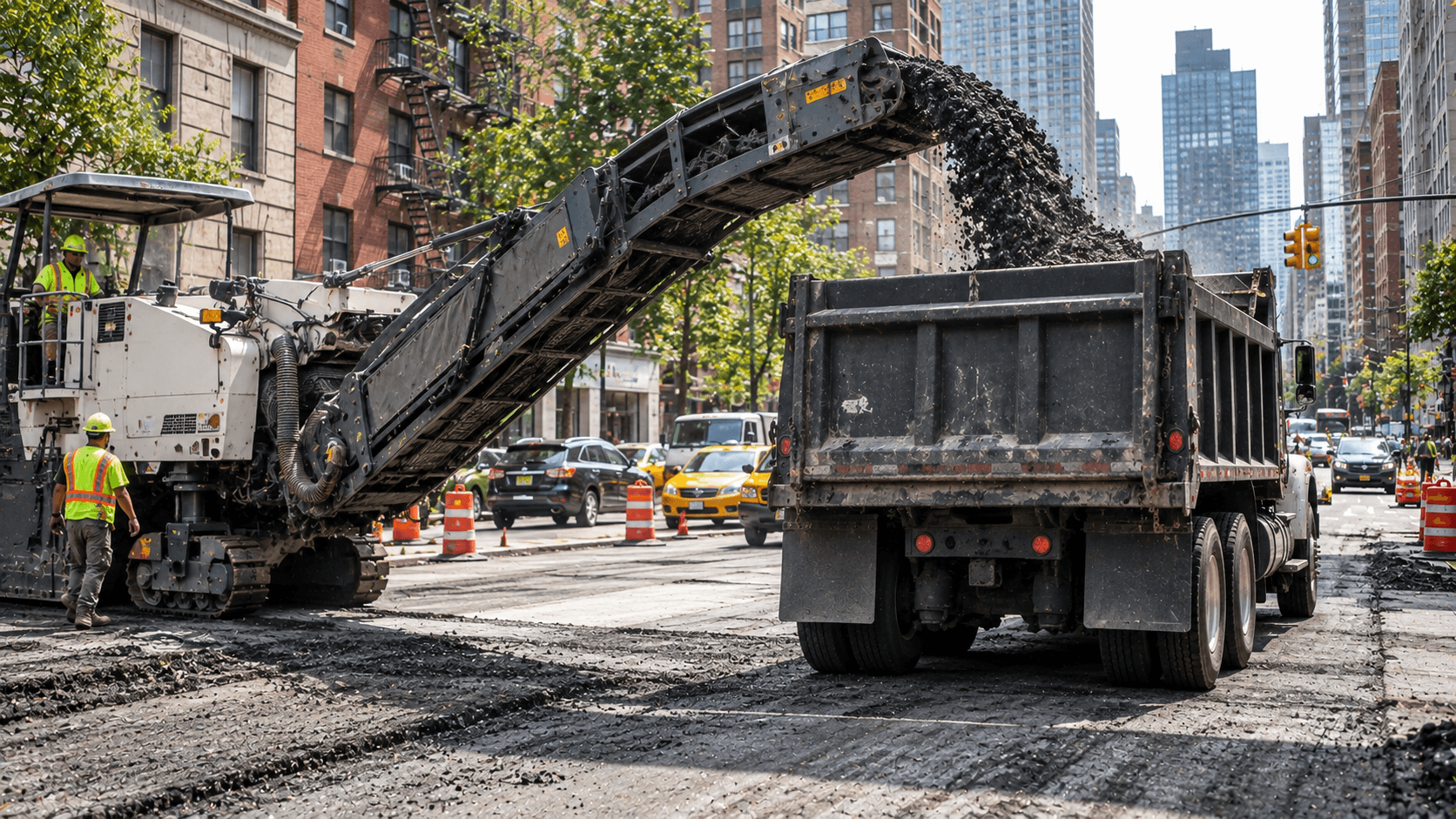
Milling generates a significant volume of removed material, and getting it off a tight urban site is its own logistics problem. Truck staging, street access, and timing hauling around traffic patterns all take more planning on a dense city block than they do on a suburban property with open access on every side.
Why Site Access Planning Matters More Here Than Elsewhere
A milling machine and the trucks supporting it need real room to maneuver. On a tight NYC commercial lot, that access has to be mapped out before equipment arrives, not figured out on site, since there's often no room to improvise around an unexpected obstacle the way there would be on a more open property.
Our guide to what asphalt milling actually is covers the process and cost in more depth. If your property is in New York, we plan every milling project around the city's specific noise rules and access constraints before mobilizing.
FAQs
Can milling equipment be used at night in NYC?
Only with an after-hours authorization from the Department of Buildings and a filed Construction Noise Mitigation Plan. Without that authorization, construction equipment use is restricted to 7am to 6pm on weekdays.
Why is milling noise a bigger issue in NYC than other cities?
Milling machines are among the loudest equipment used in commercial paving, and NYC's noise code has specific, actively enforced hour restrictions with real penalties, which makes proper scheduling a genuine planning requirement rather than a courtesy.
How does debris get hauled away after milling in a dense city site?
Removed asphalt material is loaded into trucks and hauled off site, with staging, street access, and timing planned around the property's specific location and traffic patterns, which requires more advance planning on a tight urban lot than on an open suburban property.
Does every milling project in NYC need special noise permits?
No, only projects that need to run outside the standard 7am to 6pm weekday window. Projects scheduled within those hours don't require an after-hours authorization.
Free Site Assessment