
5 Signs Your Commercial Parking Lot Needs Resurfacing
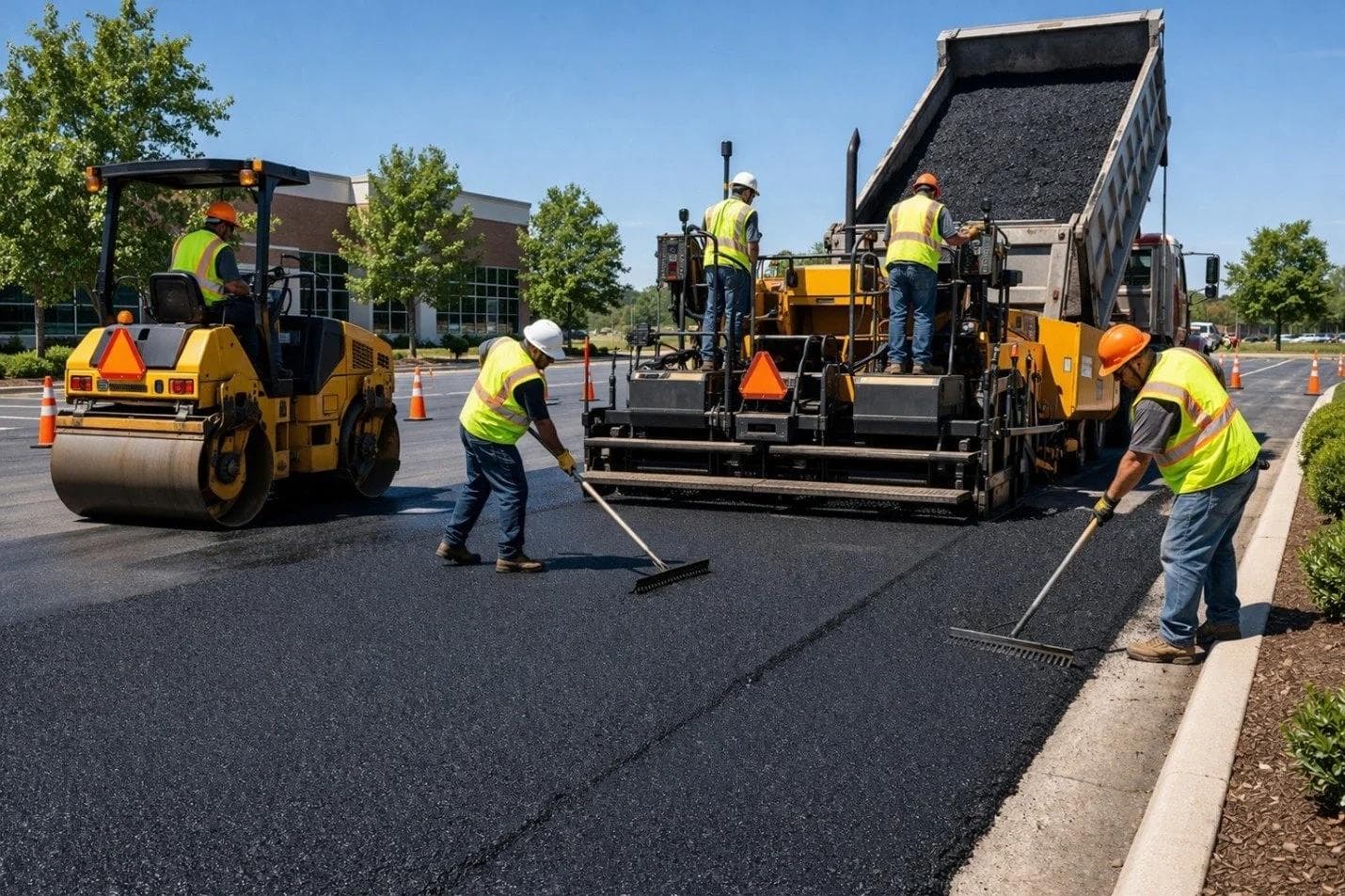
I walk commercial parking lots for a living. And after hundreds of site assessments across the country, I can tell you one thing with certainty, most property owners wait too long.
Not because they don't care. Because the signs aren't always obvious until the damage is already expensive.
So let me break down exactly what to look for. These are the five things I check on every site visit, and each one tells a different story about what your lot actually needs.
Why Timing Matters More Than You Think
Before we get into the signs, a quick note on why catching this early matters financially.
Here's the rough cost comparison:
| Maintenance Stage | Typical Cost Per Sq Ft |
|---|---|
| Crack filling (early stage) | $0.10 – $0.30 |
| Resurfacing / overlay | $2.00 – $5.00 |
| Full replacement | $5.00 – $10.00 |
Every dollar you spend on early maintenance saves you three to five dollars later. That's not a sales line, that's just how pavement deterioration works.
Sign 1, Your Asphalt Has Turned Grey
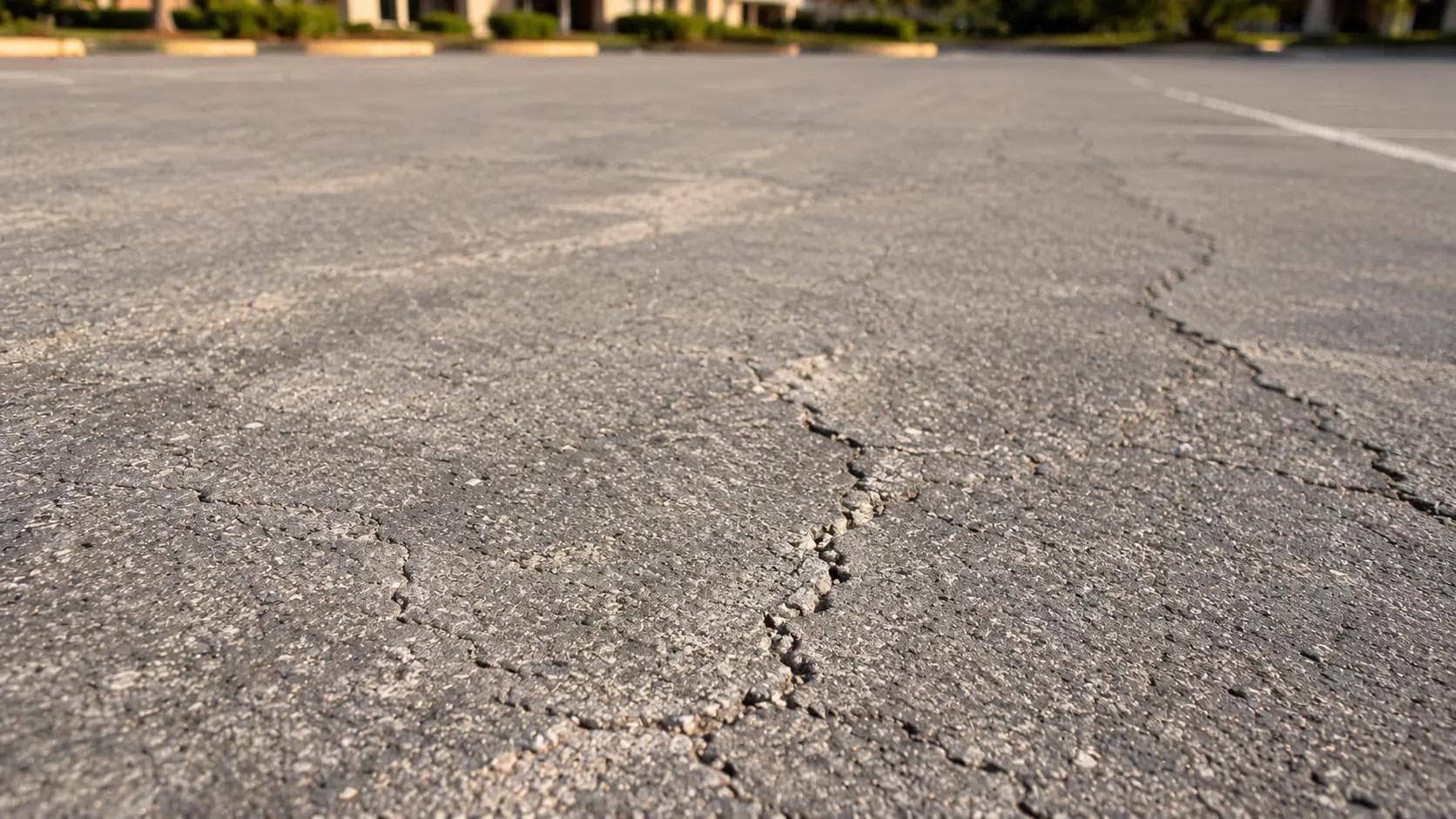
Fresh asphalt is deep black. If your lot looks grey, not just in a few spots, but across most of the surface, that's UV oxidation at work.
What's happening underneath that grey color is the asphalt binder is drying out and becoming brittle. It loses flexibility. And brittle asphalt cracks under load and temperature changes far faster than a healthy surface does.
What it means: If you're at the grey stage with no significant cracking yet, you're still in seal coating territory. Seal the surface, stop the oxidation, and you can add years to the lot's life without resurfacing.
When it crosses into resurfacing territory: When the grey surface has progressed to widespread surface cracking along with the color change. At that point, seal coating alone won't hold the surface together anymore.
Sign 2, You're Seeing Widespread Surface Cracking
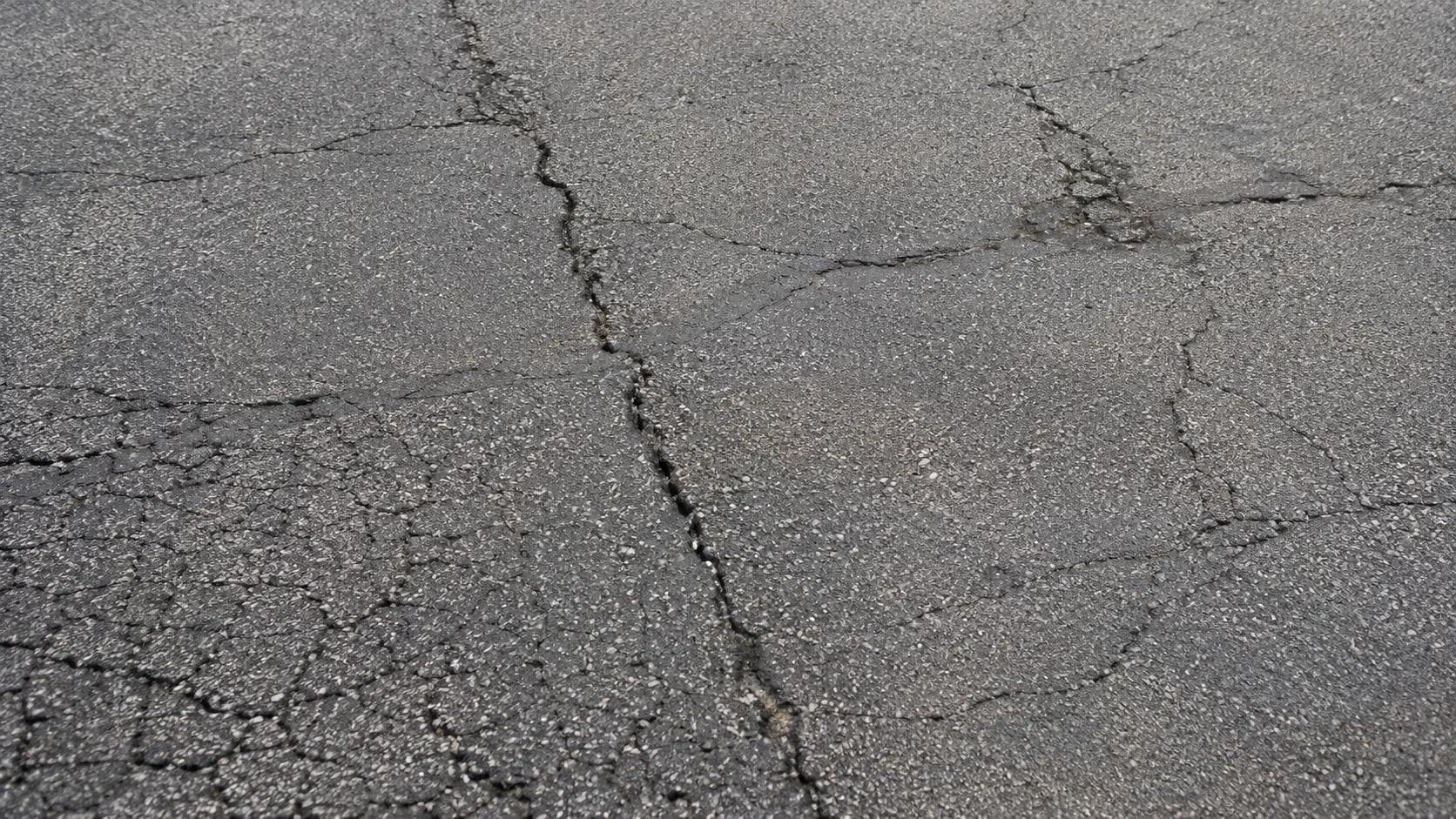
Not all cracks are equal. Here's how to read them:
Linear Cracks (Longitudinal or Transverse)
Single cracks running in one direction, usually caused by temperature cycling, pavement aging, or joint failure. If they're isolated and under an inch wide with a solid base below, crack filling handles these.
Edge Cracking
Cracking along the edges of the lot where there's no curb support. Common on lots without proper edge containment. Usually surface-level early on but spreads inward over time.
Alligator Cracking
This is the one that changes the conversation. Interconnected cracks covering a large area, looks like the skin of an alligator, hence the name. This is a structural failure signal. It means the base has been compromised.
The rule I use: If alligator cracking covers more than 20–25% of your lot's surface, you're past crack filling and likely past straightforward resurfacing. Full-depth repair in those sections, or full replacement, becomes the honest recommendation.
Sign 3, Potholes Keep Coming Back
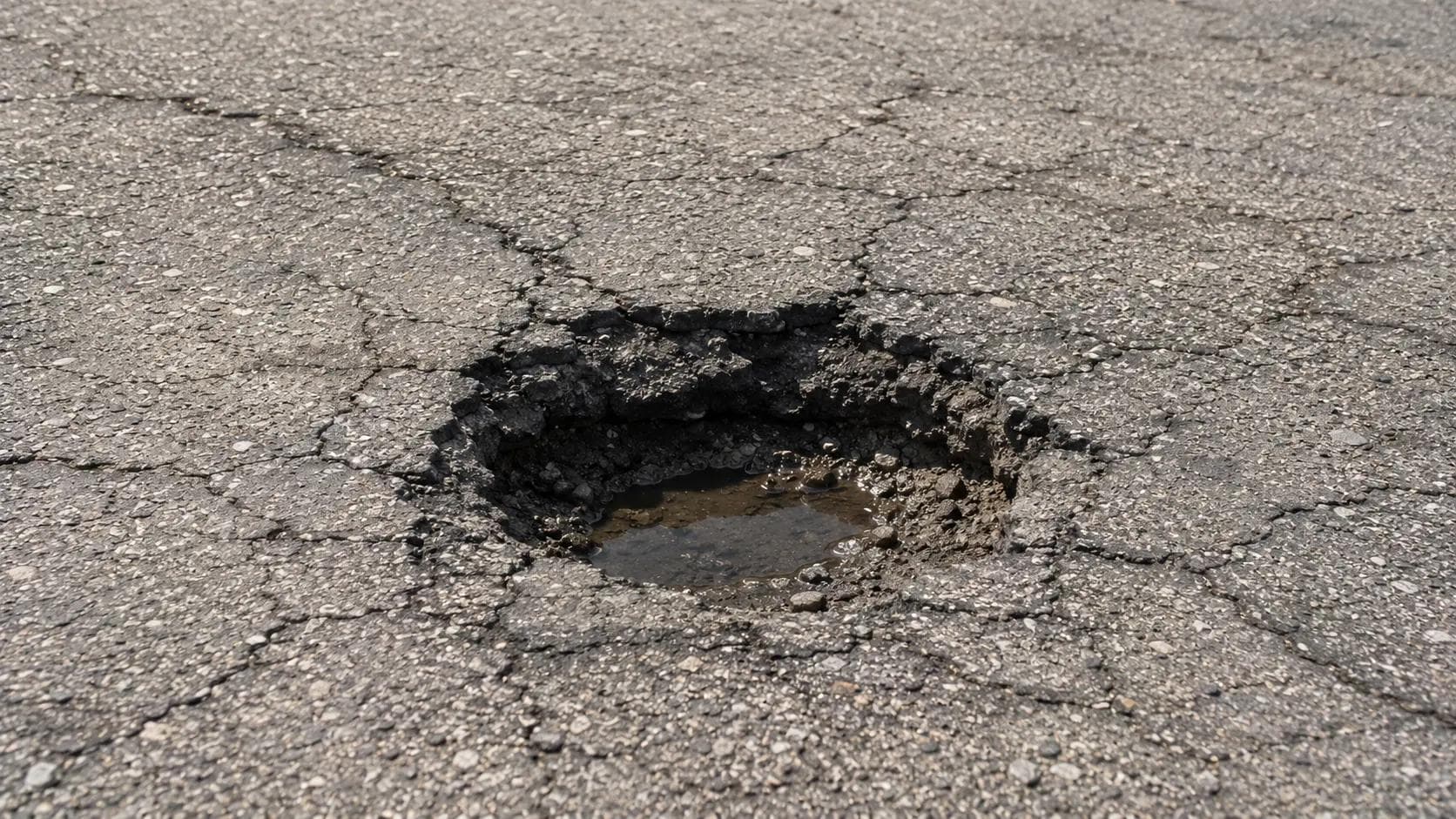
One pothole that appeared after an unusually harsh winter, that's weather. Multiple potholes in the same areas, season after season, that come back within months of being patched, that's a base problem.
Potholes form when water gets through surface cracks, saturates the base below, and the base loses its load-bearing capacity. Traffic then punches through the weakened surface.
If you've patched the same three or four spots more than twice in three years, you're not dealing with a surface problem anymore.
What it means for your decision:
- Isolated recurring pothole in one area → full-depth patch repair for that section
- Multiple recurring potholes across the lot → base assessment needed; resurfacing or replacement likely more cost-effective than continued patching
Sign 4, Water Is Pooling After Rain
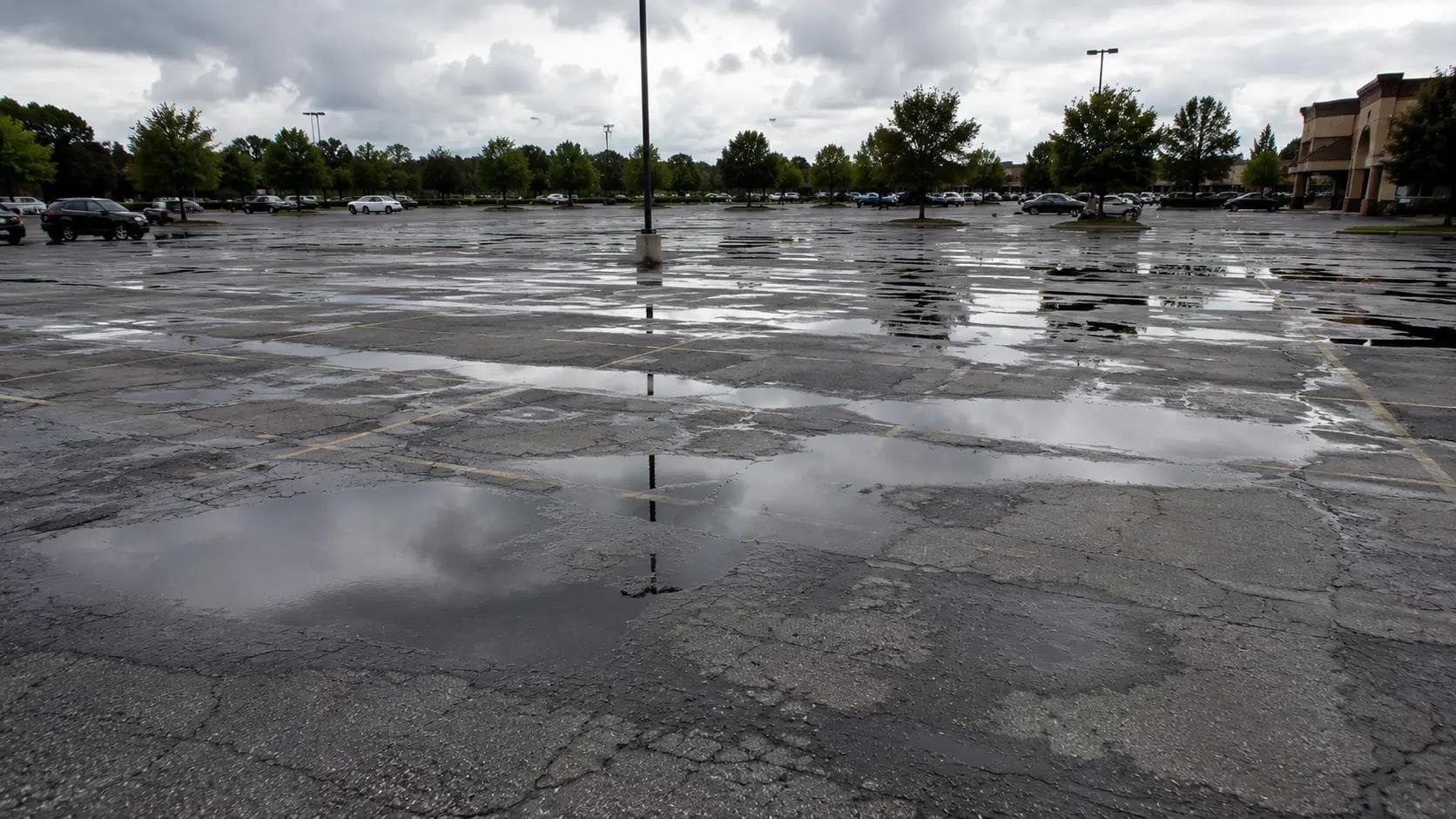
A commercial parking lot should drain. If water is sitting in multiple spots for more than a few minutes after rain stops, something has changed in the surface grade.
This happens two ways:
Surface settlement, The asphalt has compressed unevenly under load over time, creating low spots that collect water. Usually correctable with a leveling overlay.
Base settlement, The base below has shifted or eroded, causing the surface to sink. This is more serious and typically requires full-depth repair in the affected areas before any resurfacing will hold properly.
Standing water is not just a nuisance. It's the primary accelerant of pavement deterioration. Water that sits on an aging surface finds every micro-crack available, works its way into the base, and in winter, freezes, expands, and breaks the pavement apart from below.
If your lot has standing water issues, fix the drainage before resurfacing. An overlay over a drainage problem just buries the problem temporarily.
Sign 5, The Surface Is Rough, Raveling, or Losing Aggregate
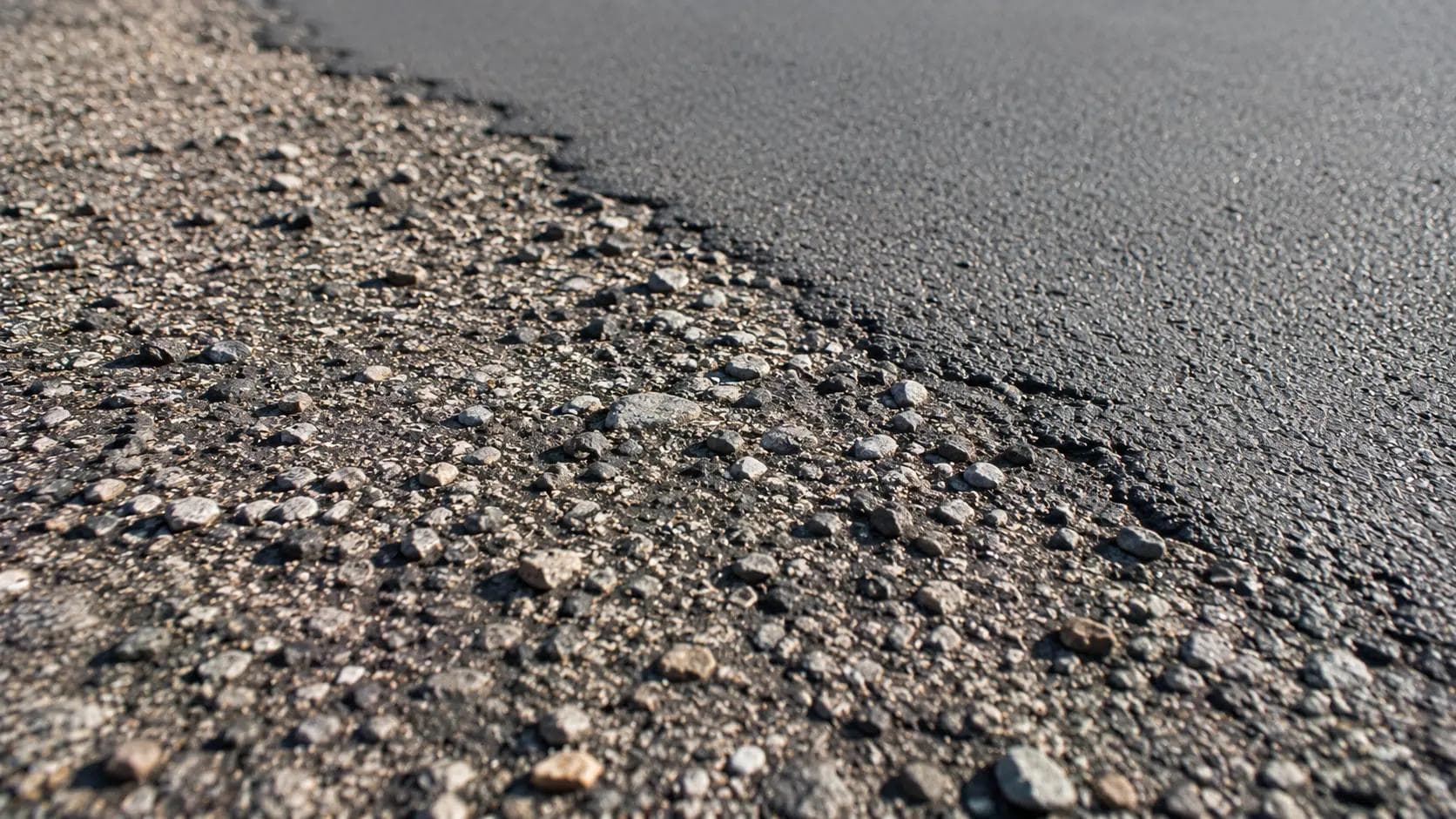
Raveling is what happens when the asphalt binder has deteriorated to the point where it can no longer hold the aggregate (stone) particles in place. The surface starts to look rough, pitted, and loose. You'll see small stones scattered across the lot surface. The texture feels like coarse sandpaper instead of a smooth wearing course.
At the raveling stage, seal coating doesn't work anymore. There's not enough intact binder surface for a sealer to bond to properly.
This is a clear resurfacing indicator, and it's one that tends to accelerate quickly once it starts.
So, Repair, Resurface, or Replace?
Here's the quick decision framework I use on every site visit:
| What You're Seeing | Likely Solution |
|---|---|
| Grey color, no cracking | Seal coat now |
| Isolated cracks, no base issues | Crack fill + seal coat |
| Surface cracking, sound base | Overlay / resurfacing |
| Alligator cracking under 25% of lot | Full-depth repair those sections + overlay rest |
| Alligator cracking over 25%, recurring potholes | Full replacement likely more cost-effective |
| Standing water | Fix drainage first, then assess overlay vs replace |
| Raveling across large areas | Resurfacing minimum |
The honest answer is that most commercial lots sit somewhere in the middle, a combination of areas that need different treatments. A good site assessment maps all of it and tells you exactly what each section needs.
FAQs
How do I know if my parking lot needs an overlay or full replacement?
The base condition is the deciding factor. If the base is structurally intact and damage is at the surface level, an overlay adds 10–15 years of service life at 30–50% of replacement cost. If the base has failed, alligator cracking everywhere, potholes recurring, drainage collapsing, overlaying it just delays the inevitable. We assess base condition on every site visit before recommending anything.
Can I seal coat a parking lot that already has cracks?
You can, but the cracks should be filled first. Seal coating over open cracks seals moisture into them rather than keeping it out. The right sequence is: crack fill → seal coat. If cracking is widespread and severe, seal coating alone isn't the right solution.
How long does a commercial asphalt overlay last?
On a sound base with proper maintenance, 10–15 years. Regular seal coating every 3–4 years after the overlay is what keeps it toward the high end of that range.
Is standing water always a sign the lot needs replacement?
Not always. Minor standing water from surface settlement can often be corrected with a leveling overlay. Significant drainage failure from base settlement typically requires more than an overlay. The only way to know which you're dealing with is a proper site assessment.
What is raveling in asphalt and how serious is it?
Raveling is the breakdown of the asphalt surface as the binder holding the aggregate loses integrity. Mild raveling in isolated spots can sometimes be addressed with surface treatments. Widespread raveling across a lot is a resurfacing indicator, the surface has deteriorated past the point where sealing or patching is effective.
How often should a commercial parking lot be professionally inspected?
Once a year minimum, ideally in late spring after winter damage is visible, and again in early fall before temperatures drop. Most pavement problems that become expensive were visible and addressable at an earlier inspection.
Free Site Assessment